The popular advice is to start with the feature list. That’s backwards. Sales automation software isn’t one category with interchangeable products. It can mean intent-led LinkedIn prospecting, CRM-centered workflows, multichannel engagement, prospecting data, enterprise revenue orchestration, deliverability infrastructure, or phone-first CRM execution.
The right choice depends on the sales problem your team needs to solve. Evaluate each platform by audience and channel coverage, automation depth, CRM and outreach integrations, pricing model, implementation effort, deliverability or account-safety requirements, and the amount of operational control your team needs. A founder testing LinkedIn demand has a different problem from an enterprise revenue organization standardizing cadences and forecasts.
The market’s direction reinforces that distinction. One estimate places the global sales automation software market at USD 11.36 billion in 2026, with projected growth to USD 27.9 billion by 2035 at a 10.5% CAGR (Business Research Insights market estimate). Adoption is also broad, with one industry summary reporting that 75% of B2B companies use sales automation tools for lead management (B2B sales automation industry summary).
The list below organizes ten options around the operating problem each one addresses, not around a generic collection of checkboxes.
Table of Contents
- 1. LeadBeast
- 2. HubSpot Sales Hub
- 3. Outreach
- 4. Salesloft
- 5. Apollo
- 6. Amplemarket
- 7. lemlist
- 8. Reply
- 9. Smartlead
- 10. Close
- Top 10 Sales Automation Tools Comparison
- Match the Platform to Your Operating Model
1. LeadBeast
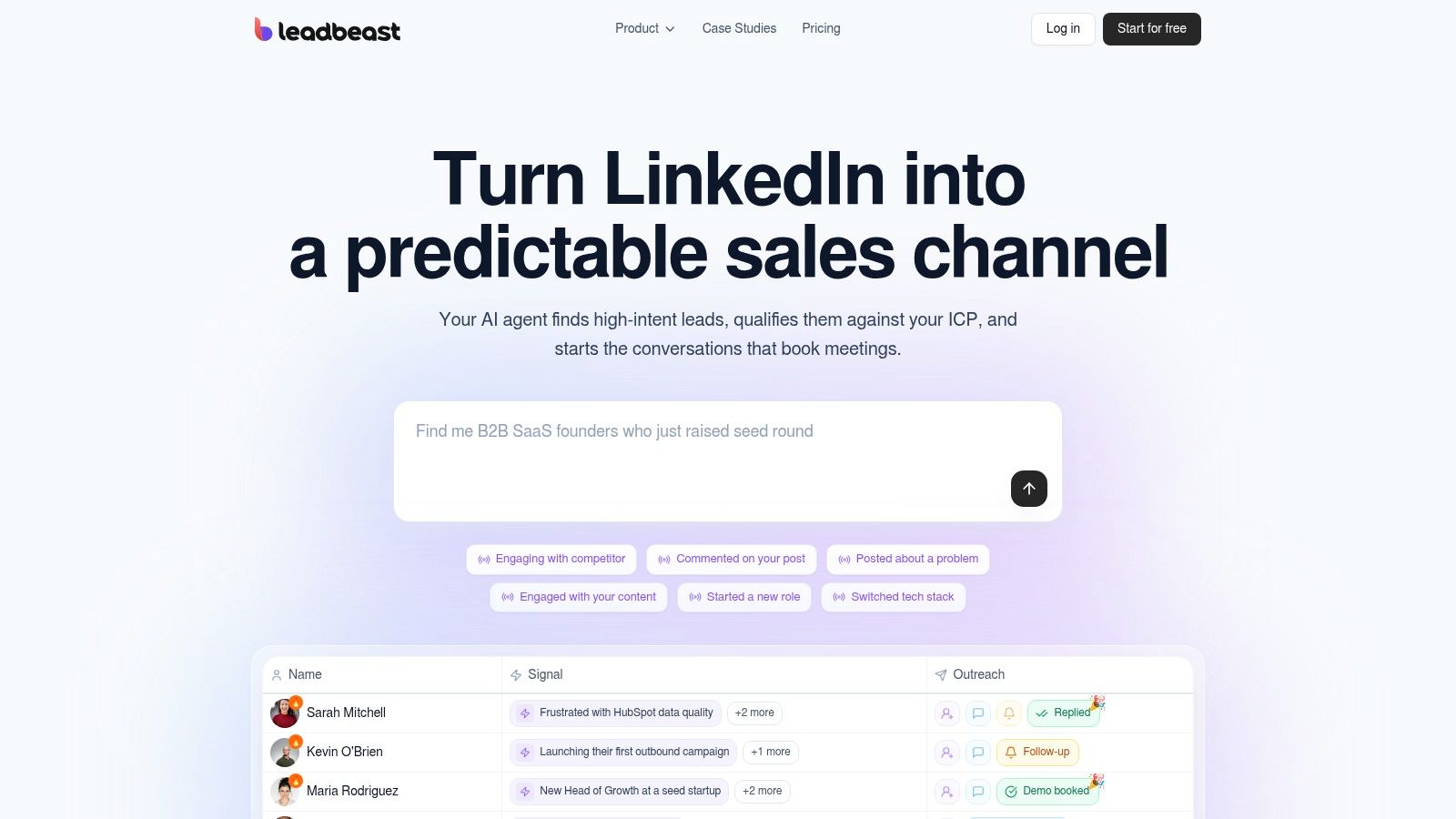
LinkedIn automation is often evaluated by message volume. LeadBeast addresses a different sales problem: identifying LinkedIn buying intent before outreach begins. It monitors public activity such as posts, comments, role changes, and competitor engagement, then combines those signals to find people and companies showing a broader pattern of interest.
That signal-stacking model separates the platform from tools that trigger campaigns from one isolated action. LeadBeast can qualify prospects against a plain-language ideal customer profile, enrich and score records, and maintain audience lists that change as behavior changes. The workflow therefore emphasizes timing and context rather than static filters or exported lists.
Strongest use case
The clearest fit is B2B SaaS founders, sales leaders, SDR and BDR teams, growth teams, and agencies running LinkedIn-led outbound. After a prospect matches the defined ICP and shows a relevant signal, the platform can generate context-aware LinkedIn messages, run multi-step follow-ups, and collect replies in a centralized inbox.
The operating model also includes controls intended to make activity appear more human. Pacing, delays, and engagement limits are designed to reduce the risks of blunt LinkedIn automation. They do not remove the need to check LinkedIn’s rules or monitor account behavior, but they provide more control than a system focused only on send volume.
Practical rule: Automate the response to a meaningful pattern, not every public action.
Integration fit and trade-offs
LeadBeast supports two-way syncing with common CRM and outreach tools, plus API and MCP access for custom workflows. Living audiences reduce repeated list uploads, while scoring and enrichment help keep campaign data aligned with the intended buying stage. Buyers should confirm which fields, activities, and ownership changes sync in each direction before implementation.
The limitations are specific. There is no mobile app, and performance depends on whether the target audience is active and expressive on LinkedIn. Pricing is per LinkedIn sender, with a 7-day free trial and published plans of $99 per month for Essential, $237 per month for Professional, and $483 per month for Business (LeadBeast). Vendor-reported outcomes include 30% to 60% connection acceptance rates and 20% to 55% reply rates. Those ranges should be treated as directional evidence, not expected results.
2. HubSpot Sales Hub
HubSpot Sales Hub is the most natural fit when the CRM should remain the center of the sales motion. It combines contact and deal records with sequences, calling, reporting, forecasting, playbooks, and workflow automation, so reps can execute follow-up without moving constantly between separate systems.
The platform’s operating model is CRM-first automation. Sequences can include email steps and LinkedIn tasks, while higher-tier workflow automation can route records, update fields, and trigger actions based on CRM conditions. Built-in calling, conversation intelligence, and playbooks extend automation into live selling and manager oversight.
Integration fit
HubSpot is especially attractive for teams that want a broad application ecosystem around a central customer record. Its product documentation and marketplace describe more than 2,000 integrations (HubSpot Sales Hub). That breadth can reduce custom integration work, although buyers should still test the exact direction of synchronization for contacts, activities, ownership, and lifecycle stages.
The per-seat pricing model has no seat minimums, which can make initial rollout easier for smaller teams. It also gives managers a straightforward way to add users as the sales motion develops.
Trade-offs
Professional and Enterprise tiers carry one-time onboarding fees, and AI credit usage may introduce additional costs as teams increase automation. That means the headline subscription price isn’t the whole procurement question. Ask which workflow actions consume credits, which reporting functions require higher tiers, and whether your CRM structure is clean enough for automation to operate reliably.
HubSpot works best when the team wants one operating system for prospecting, pipeline management, and reporting. It’s less compelling when a specialized intent engine, high-volume sending infrastructure, or enterprise engagement governance is the primary requirement.
3. Outreach
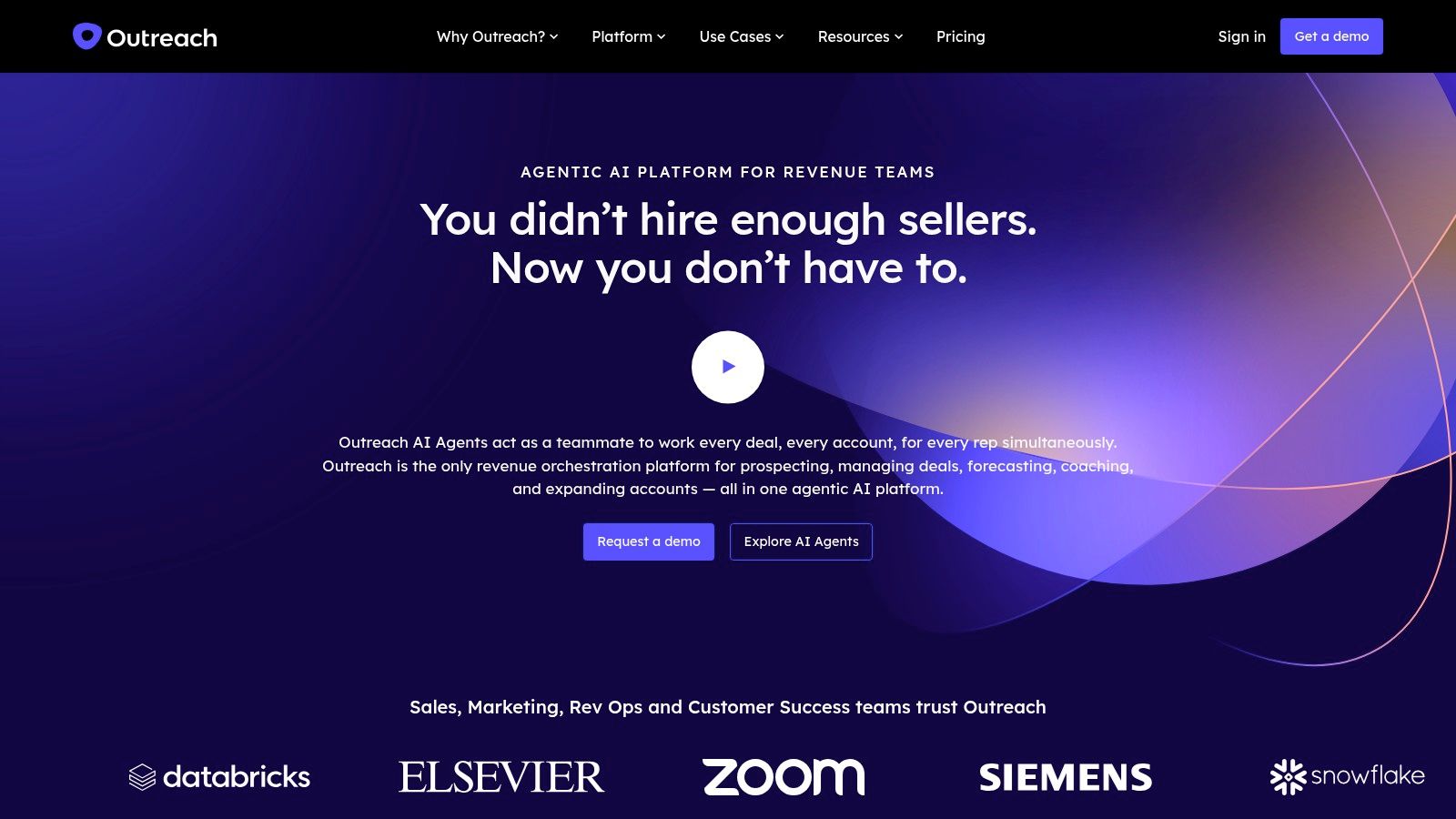
Outreach is designed for larger organizations that need to standardize sales engagement, coaching, pipeline inspection, and governance across teams. Its core operating model is enterprise sales engagement with agentic AI support, rather than lightweight sequence automation for a small group of sellers.
The platform supports multichannel engagement across email, calls, tasks, and social steps. AI-powered sequences and reply handling can help teams coordinate follow-up, while conversation intelligence and coaching tools give managers a way to inspect execution and reinforce sales processes.
Strongest use case
Outreach makes the most sense when sales leaders need consistent cadences, controlled rollout, and visibility across a complex organization. Enterprise governance, rollout resources, University content, and Success Center support are important because implementation quality often determines whether an automation platform becomes part of daily seller behavior.
A useful definition of the category appears in this explanation of what sales automation means for B2B teams. Automation should remove repetitive execution while preserving human judgment in conversations, qualification, and active deal management. Outreach is aligned with that model when leaders use it to manage process consistency rather than maximize activity.
Commercial considerations
Outreach uses agent-based packaging across Core, Essentials, Plus, and Pro offerings, with AI credit consumption included in the commercial structure. There’s no public list pricing, so buyers should request a model showing both seat costs and expected AI credit usage (Outreach).
The trade-off is complexity. Professional onboarding services may be appropriate for larger deployments, but they also add effort and cost. Teams should validate governance requirements, CRM ownership, data retention, sequence permissions, reporting depth, and the process for migrating existing cadences before signing.
4. Salesloft
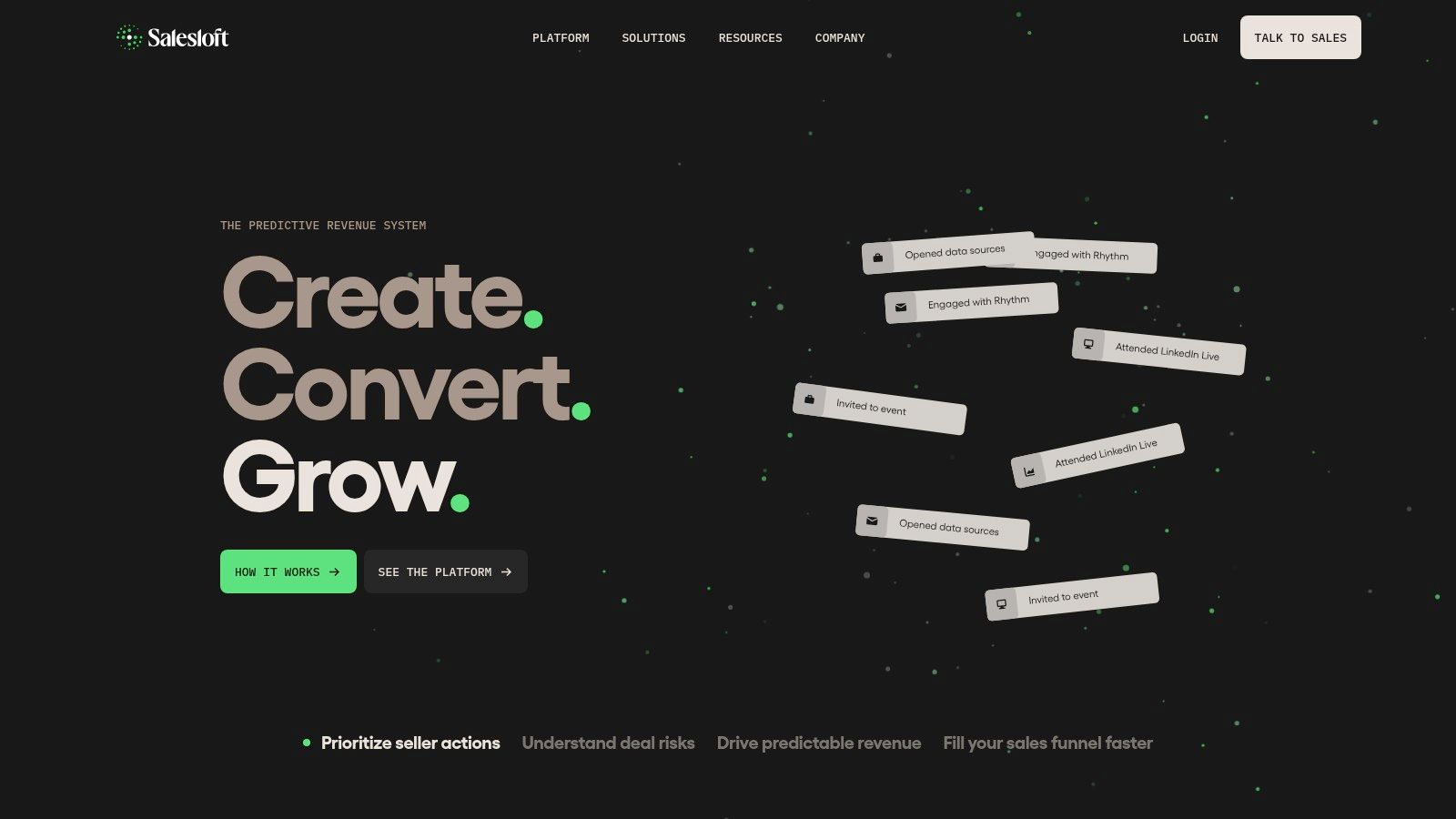
Salesloft, now operating alongside Clari following the merger, targets companies that want sales engagement and revenue orchestration in one system. Its relevance is broader than outbound sequencing because the combined direction connects cadences, conversations, deals, and forecasts across revenue roles.
The platform includes cadences, a dialer, and conversation intelligence, then extends into deal and forecast workflows through the broader predictive revenue system. That makes it a strong candidate for organizations trying to connect frontline execution with the forecasts and risk views used by sales leadership.
Operating model
Salesloft is best understood as an orchestration layer for organizations that already have established sales processes and need shared data across functions. Reps can use engagement workflows, managers can inspect conversations and deal movement, and revenue leaders can connect execution signals with forecasting.
The post-merger roadmap is a major buying consideration. A unified roadmap and shared data and AI capabilities may reduce fragmentation over time, but buyers should distinguish current functionality from planned integration. Ask for a product-specific demonstration of how engagement activity, deal records, and forecast workflows connect today.
Trade-offs
Salesloft doesn’t publish standard pricing, and the purchase is typically sales-led and enterprise-oriented (Salesloft). Organizations migrating from separate engagement and forecasting tools should budget for change management, data mapping, process redesign, and user training.
Salesloft is a better fit than a standalone sequencer when the problem is revenue coordination across roles. If the immediate need is to find prospects or launch a small outbound motion, the platform may introduce more governance and implementation effort than the team needs.
5. Apollo
Apollo combines B2B prospecting data with sales engagement, making it a practical choice for teams that don’t want to assemble a separate database, sequencing platform, and dialer before launching outbound. Its operating model starts with contact discovery, then carries those records into engagement and deal execution.
The platform supports sequences, A/B testing, call recording, automated follow-ups, and integrations with major CRM and sales tools. That combination can reduce vendor sprawl, particularly for lean teams that need a usable outbound foundation without stitching together many specialist products.
Strongest use case
Apollo is strongest when the sales problem is finding and activating contacts from one working environment. Its large B2B contact database gives users a prospecting layer, while engagement functions turn selected contacts into managed outreach workflows.
That makes ICP definition especially important. Teams should document the roles, company attributes, buying context, exclusions, and qualification rules that matter before building lists. This guide to what an ideal customer profile includes is useful context because a broad database doesn’t automatically produce a focused account universe.
Pricing and validation
Apollo offers a free-forever Starter option, while its broader commercial structure uses credits for actions such as data access, exports, and API usage (Apollo). Credit-based pricing can be flexible, but it complicates budgeting when users export heavily, enrich records, or build workflows that consume credits continuously.
Buyers should test data coverage for their target segment, verify contact accuracy, model API and export requirements, and confirm how Apollo synchronizes ownership and activity with the CRM. Apollo is compelling for data plus engagement, but teams that already have trusted data may prefer a more specialized execution layer.
6. Amplemarket
Amplemarket is aimed at sales teams that want AI-assisted prospect research, buying-signal tracking, and multichannel execution in one platform. It sits between a data provider and a sales engagement system, with LinkedIn activity included in its signal and workflow model.
The platform’s AI copilot supports research and personalization, while multichannel sequences can coordinate email, LinkedIn workflows, and other outreach steps. Native integrations with Salesforce, HubSpot, and other systems make it suitable for teams that want to keep the CRM as the system of record while consolidating intent and engagement work.
Signal-first targeting
Amplemarket’s strongest use case is a team that wants to move beyond static contact lists. Buying-signal tracking can help sellers prioritize accounts based on observable behavior, while verified data supports the transition from signal to reachable contact.
That approach aligns with a broader shift in sales automation. Industry coverage describes buying signals as behaviors that can trigger outreach and emphasizes combining multiple signals instead of reacting to one noisy event (buying-signal tools for 2026). The operational question is whether the signals are predictive enough for your market and whether sellers can review the context before automated contact begins.
Trade-offs
Amplemarket doesn’t publish standard plan pricing, so teams must contact sales for a quote (Amplemarket). Data quality and breadth can vary by segment, which makes verification essential. Run sample searches against the exact industries, geographies, seniority levels, and account sizes you sell to before evaluating personalization quality or sequence performance.
Amplemarket fits teams that want to consolidate intent, data, and outreach. It may be unnecessary for organizations that already have reliable signal infrastructure and only need a focused sequencing tool.
7. lemlist
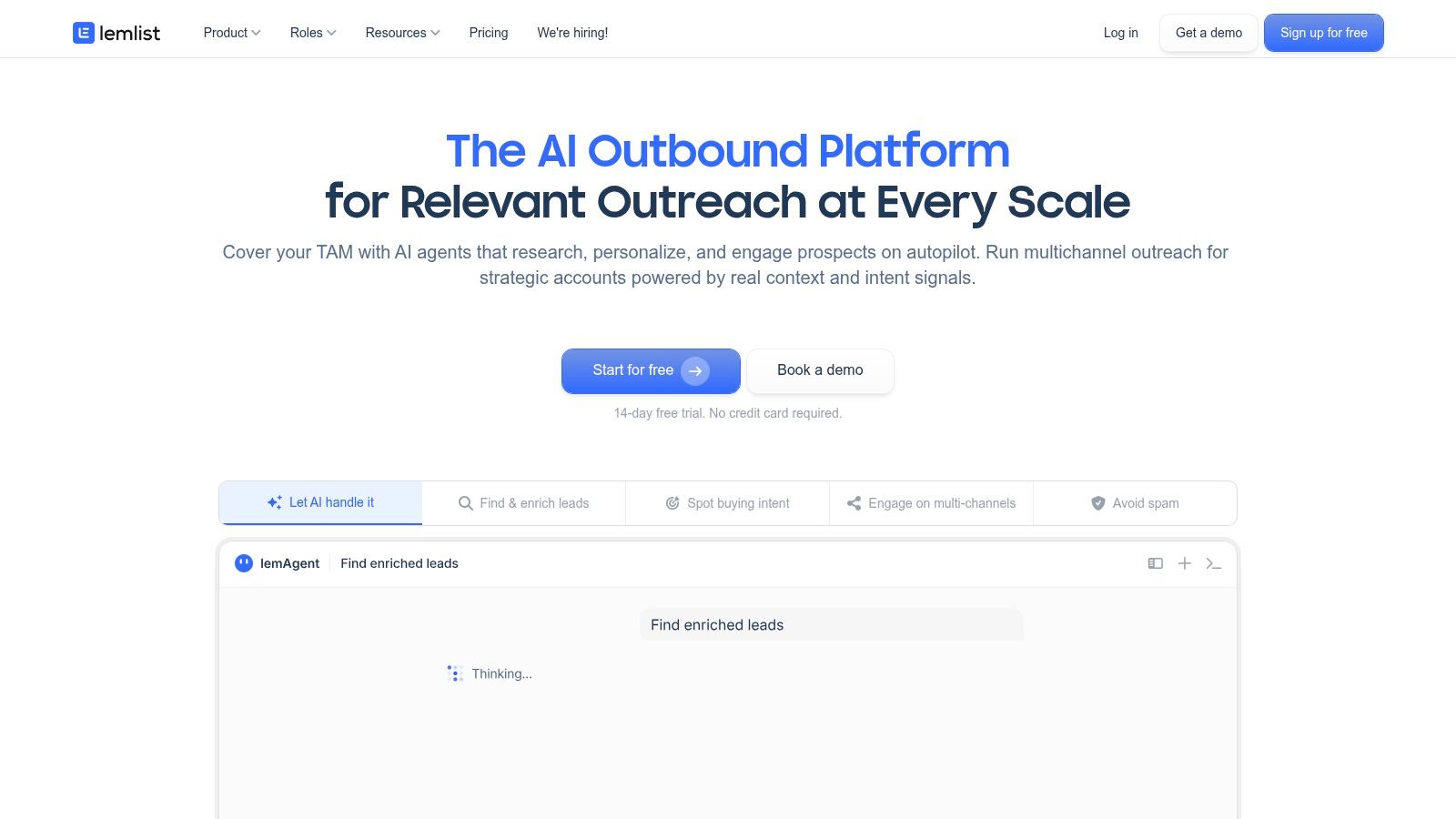
lemlist is a practical option for teams and agencies that need self-serve multichannel outbound with deliverability controls. Its workflows cover email, LinkedIn tasks, SMS and WhatsApp, and calling, giving users more channel flexibility than an email-only platform without requiring an enterprise rollout.
The product also includes a lead database, deliverability hub, inbox rotation, dialer and VoIP integrations, and AI tooling through lemAgent for research and personalization. That mix makes lemlist useful when a small team wants to launch quickly but still needs operational controls around sending infrastructure.
Best fit for flexible outbound
lemlist’s paid plans include unlimited contacts, and its self-serve structure makes procurement easier for lean teams and agencies (lemlist). Pay-per-success enrichment and intent credits can add capability without forcing every user into a large data commitment.
Its deliverability safeguards are a central strength. Inbox rotation and related controls can help teams manage sending operations, but they don’t replace domain configuration, list hygiene, relevant messaging, or ongoing monitoring. LinkedIn automations also need careful use so the workflow remains within applicable platform rules.
Cost and channel trade-offs
The multichannel plan is priced per user, so costs rise as more sellers or client workspaces need access. Buyers should model the number of users, mailboxes, phone requirements, enrichment usage, and LinkedIn workflows together rather than evaluating only the base plan.
lemlist is strongest when the sales motion requires several outbound channels and hands-on control. Teams that only need high-volume email may find a dedicated email infrastructure product more economical, while teams centered on intent may want a platform that prioritizes signal collection before sequence execution.
8. Reply
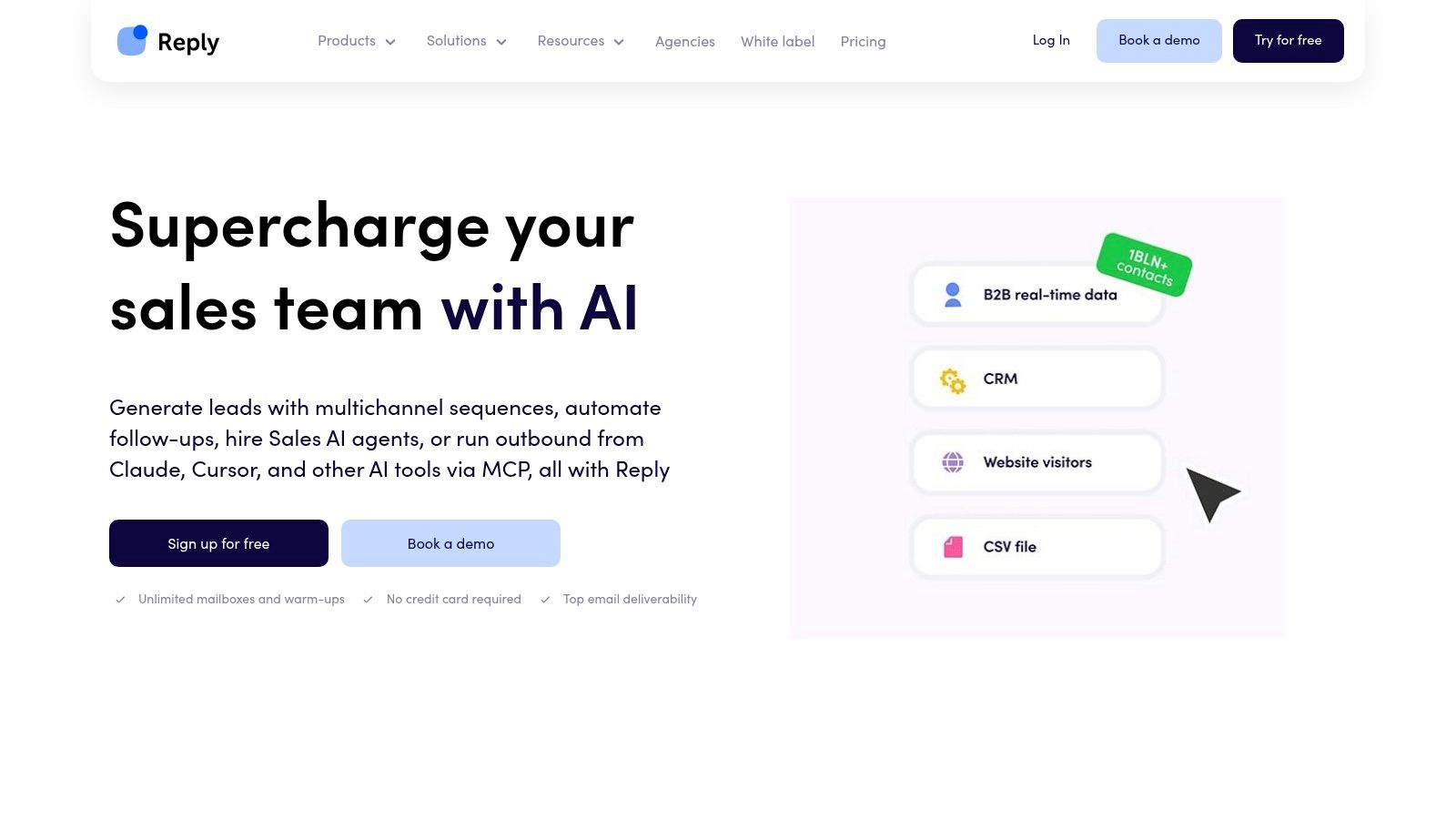
Reply is designed for teams that want multichannel cadences with predictable plan structure. Its workflows combine email with LinkedIn tasks, calling, and SMS, while website visitor identification and a built-in B2B data finder add prospecting signals around the engagement layer.
The platform offers volume-based active-contact pricing for some plans and flat multichannel tiers for others. That distinction matters because the most economical model depends on whether your team manages a large rotating prospect pool or a more stable set of active contacts.
Communication coverage
Reply includes an integrated dialer, SMS, LinkedIn tasks, warm-up and anti-spam tooling, and an optional AI SDR add-on for managed outreach (Reply). This makes it a flexible fit for teams that want to keep human reps in control of the sales motion while adding automation around research, timing, and follow-up.
The optional managed AI SDR offering is relevant for organizations testing a more automated operating model. Buyers should ask what the AI SDR handles, where human approval is required, how responses are routed, and how activity is written back to the CRM.
Plan selection
Reply’s breadth can create avoidable cost if teams choose a tier without mapping their actual channel requirements. LinkedIn and calling add-ons may be priced per mailbox or account in certain plans, so a seemingly simple multichannel rollout can have several usage dimensions.
Reply works well for teams that need email, social tasks, calls, and SMS in one cadence framework. It’s less suited to organizations that need deep enterprise forecasting or a LinkedIn-first intent engine as the primary source of prospects.
9. Smartlead
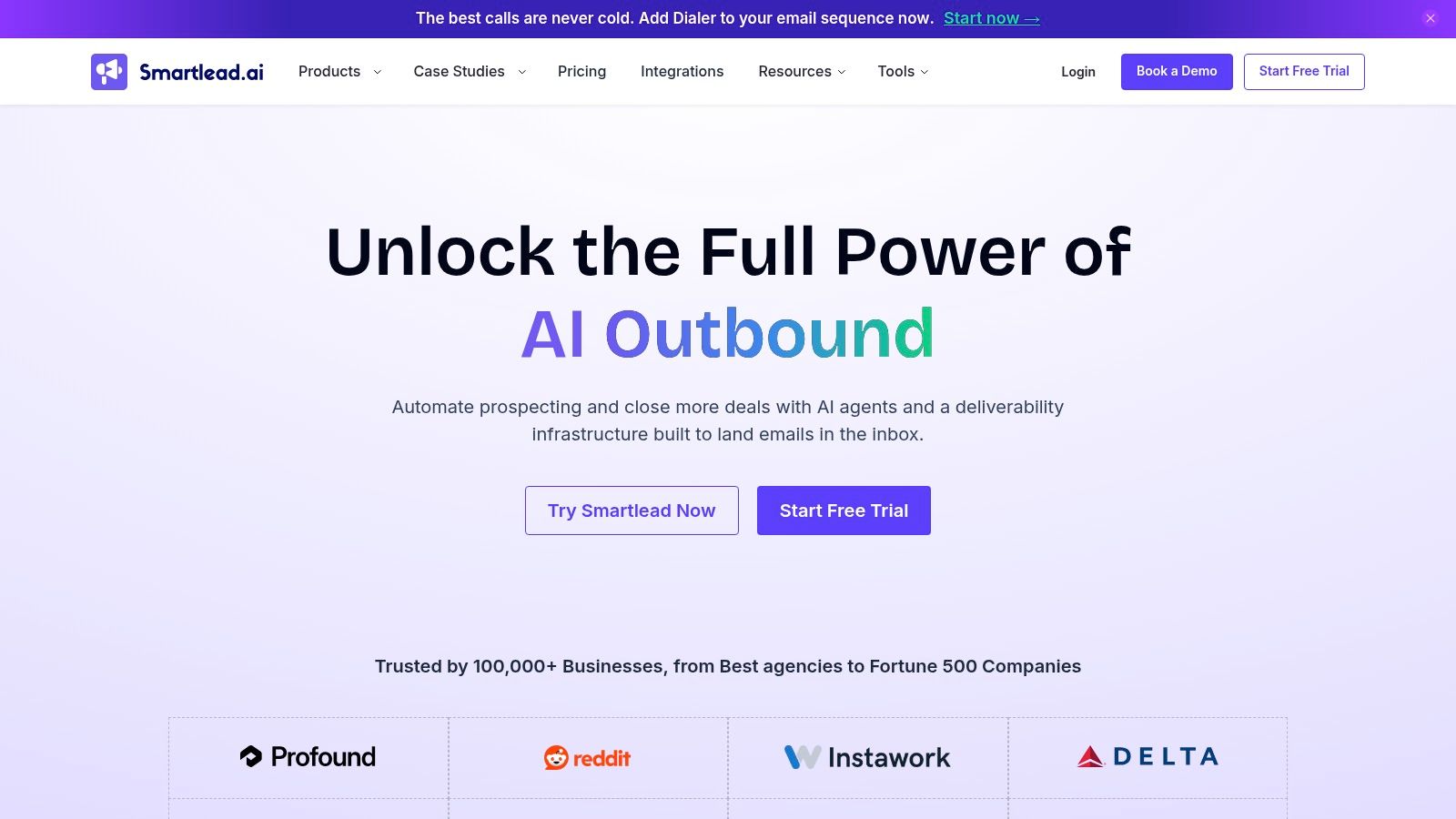
Smartlead focuses on the operational problem many high-volume senders face: running email outreach across multiple mailboxes while managing deliverability. Its pricing and workspace model are built around sending volume rather than conventional per-seat expansion, which makes it particularly relevant for agencies and teams with several sending identities.
Plans support unlimited email accounts with mailbox rotation. Optional pre-warmed mailboxes, private infrastructure, verification, SmartServers, and SmartDelivery give users additional control over the technical side of outbound operations.
Strongest use case
Smartlead is a good fit when email is the center of the sales motion and the team wants to scale sending without adding a separate user license for every mailbox (Smartlead). Agency workspaces and whitelabel options also support organizations managing campaigns for multiple clients.
The platform is less as a full sales automation environment. It’s primarily email-centric, so teams that need phone, SMS, LinkedIn, or CRM-centered deal workflows will likely require additional tools. That makes it important to assess the complete stack, not just the sending layer.
Deliverability economics
Smartlead’s deliverability features can improve operational visibility, but optional verification, warm-up, and private infrastructure add-ons may increase the total cost. Teams should also define who owns domain health, mailbox provisioning, suppression management, and reply handling.
A useful comparison point is the broader category of LinkedIn lead generation tools. LinkedIn-first platforms and email infrastructure platforms solve different problems. Smartlead is strongest when the target account list already exists and the challenge is reliable email execution at volume, not discovering intent from social behavior.
10. Close
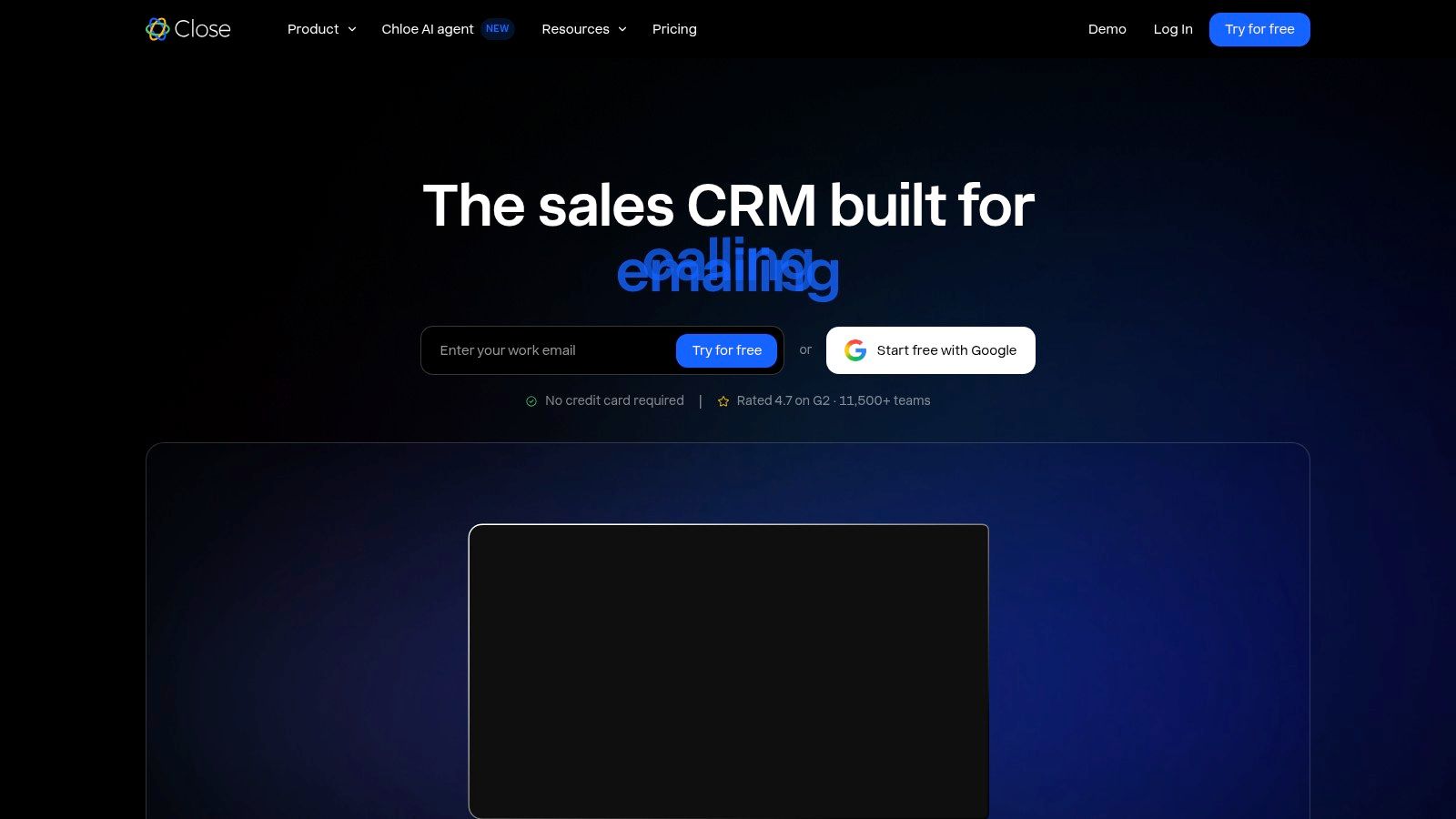
Close is a communication-led CRM for teams that rely heavily on phone and SMS. Instead of treating calling as an integration attached to a separate CRM, Close puts calling, texting, workflows, and pipeline management in one operating environment.
The product includes a native power dialer, SMS, workflows, and an AI agent called Chloe. Higher tiers support predictive dialing, while AI call summaries and transcripts are available through an add-on. Usage-based telephony, phone numbers, minutes, and AI credits all contribute to the final bill.
Best fit for phone-first selling
Close works well for inside sales teams that need reps to move quickly from a CRM record into a call, follow up by text, and keep activity associated with the opportunity. Native communications can reduce tab-switching and shorten the path from task assignment to execution (Close).
Self-serve onboarding and published plan names make the product easier to evaluate than a sales-led enterprise platform. Teams can usually understand the basic operating model quickly, then decide whether the calling and AI layers justify additional usage.
Trade-offs
Telephony and AI fees can push the total cost above headline seat pricing for heavy callers. Build a forecast using expected numbers, minutes, AI usage, recording needs, and user count before comparing Close with a CRM that relies on external communications tools.
Close is also less flexible for organizations required to keep another CRM as the system of record. Validate data ownership, synchronization direction, reporting continuity, and whether call and SMS activity can be exported or mirrored in the required format.
Top 10 Sales Automation Tools Comparison
| Product | Core features & USPs (✨) | UX / Performance (★) | Pricing / Value (💰) | Target audience (👥) | Integrations & Safety (✨) |
|---|---|---|---|---|---|
| LeadBeast 🏆 | Intent‑first signal stacking, living audiences, AI moment‑matched LinkedIn outreach ✨ | ★★★★☆, 30–60% accepts, 20–55% replies; centralized inbox | 💰 Essential $99/mo, Pro $237/mo, Business $483/mo; 7‑day trial | 👥 B2B SaaS founders, SDR/BDR, VPs Sales, agencies | CRM & outreach sync, API/MCP; human‑like pacing to protect accounts |
| HubSpot Sales Hub | CRM + sequences, calling, workflows, reporting ✨ | ★★★★☆, strong reporting & scale | 💰 Per‑seat published pricing; Pro/Ent add‑ons & onboarding fees | 👥 SMB → mid‑market sales teams, revenue ops | 2,000+ native integrations; tight CRM automation |
| Outreach | Enterprise cadences, AI sequences, coaching & governance ✨ | ★★★★☆, enterprise analytics & coaching | 💰 Custom quoted, seats + AI credits | 👥 Large sales orgs standardizing process & governance | Enterprise governance, conversation intelligence, broad integrations |
| Salesloft (Clari+Salesloft) | Engagement cadences + deal/forecasting (unified revenue) ✨ | ★★★★☆, engagement + predictive revenue | 💰 Custom quoted; sales‑led enterprise purchase | 👥 Revenue ops, enterprise sales leaders | Deal & forecast integration; enterprise data/AI roadmap |
| Apollo | Large B2B contact DB + sequencing, prospecting data ✨ | ★★★☆☆, good prospecting + engagement blend | 💰 Free starter; credit/usage model for exports & API | 👥 Growth teams, SDRs, SMBs needing data + outreach | CRM integrations; credit‑based API/export controls |
| Amplemarket | Buying‑signal tracking, AI copilot, multichannel LinkedIn workflows ✨ | ★★★★☆, signal‑first targeting, LinkedIn capture | 💰 Contact sales, no public plans | 👥 Teams wanting signal‑driven automation | Native Salesforce/HubSpot; verified data (varies by segment) |
| lemlist | Multichannel sequences, deliverability hub, AI research (lemAgent) ✨ | ★★★★☆, fast setup, strong deliverability | 💰 Transparent self‑serve plans; per‑user multichannel tiers | 👥 Agencies, lean teams prioritizing deliverability | Dialer/VoIP integrations; deliverability & inbox rotation controls |
| Reply | Multichannel cadences, warm‑up, optional AI SDR managed offering ✨ | ★★★☆☆, predictable per‑user pricing, warm‑up tools | 💰 Active‑contacts / per‑user pricing; mailbox add‑ons | 👥 Teams needing multichannel with clear pricing | Warm‑up/anti‑spam tooling, built‑in B2B data finder |
| Smartlead | Unlimited mailboxes, mailbox rotation, deliverability infra ✨ | ★★★☆☆, high‑volume email focus | 💰 Volume‑based (sends) pricing; agency plans & add‑ons | 👥 Agencies & high‑volume senders | SmartServers, warmup & verification; email‑centric stack |
| Close | CRM with native calling/SMS, dialer, AI agent (Chloe) ✨ | ★★★★☆, fast time‑to‑value for phone/SMS teams | 💰 Published plans; telephony & AI usage fees as add‑ons | 👥 Phone/SMS‑centric sales teams, SMBs | Native telephony/SMS, automations; less flexible with external CRMs |
Match the Platform to Your Operating Model
The strongest tool depends less on the size of the feature list than on the constraint your sales team is trying to remove. A LinkedIn-led growth team needs signal detection and context-aware messaging. A phone-heavy inside sales group needs fast dialing, SMS, and CRM activity capture. An enterprise revenue organization needs governance, coaching, forecasting, and controlled process rollout.
For intent-led targeting, start with LeadBeast or Amplemarket. LeadBeast is the more focused option when public LinkedIn behavior is the primary source of intent and the team wants living audiences, signal stacking, plain-language ICP matching, and LinkedIn-native outreach. Amplemarket is broader, combining buying signals, verified data, AI research, and multichannel execution. The distinction is operational. LeadBeast emphasizes LinkedIn activity as the source of context, while Amplemarket is designed to consolidate data and outreach across a wider workflow.
Choose HubSpot Sales Hub for CRM-centered automation when the CRM should own contact records, workflow rules, sequences, reporting, and forecasting. Its integration ecosystem and low administrative burden make it a practical option for teams that want to start inside one platform rather than coordinate multiple specialist systems.
For enterprise governance and revenue orchestration, compare Outreach and Salesloft. Outreach is oriented toward engagement standards, coaching, conversation intelligence, and agent-based capabilities. Salesloft is the stronger candidate when engagement must connect with deal and forecast workflows across a unified revenue system. Both require more careful validation than a self-serve tool, particularly around implementation, permissions, reporting, and commercial usage.
Apollo is the natural candidate for prospecting data plus engagement. It can reduce vendor sprawl by combining a contact database with sequencing, calling, testing, and follow-up. Its credit model means procurement should estimate data access, exports, API calls, enrichment, and user behavior rather than relying on the entry-level price.
For flexible multichannel outbound, evaluate lemlist and Reply. lemlist stands out for self-serve deployment, deliverability tooling, inbox rotation, and channel breadth. Reply offers a structured cadence environment with email, LinkedIn tasks, calls, SMS, visitor identification, and an optional AI SDR layer. The right choice depends on whether deliverability operations or plan predictability is the bigger constraint.
Smartlead is the clearest fit for email-volume operations. Its unlimited mailbox model, rotation, agency workspaces, and deliverability infrastructure support teams that already know which accounts to contact. It shouldn’t be mistaken for a complete multichannel or CRM-centered sales system.
Close belongs on the shortlist for phone- and SMS-led selling. Its native communication layer can reduce tab sprawl and speed execution, but telephony and AI usage need to be modeled separately from seat pricing. It’s a weaker fit when an external CRM must remain the authoritative system.
Before committing, validate six areas in a live workflow:
- Integration direction: Confirm which system owns contacts, activities, campaign status, opportunity stages, and replies.
- Data ownership: Ask whether you can export enriched records, conversation history, scores, and workflow logs in usable formats.
- Usage-based costs: Model AI credits, contact credits, exports, minutes, phone numbers, mailboxes, warm-up, verification, and add-ons.
- Channel rules: Review LinkedIn automation safeguards, email sending requirements, SMS compliance, suppression logic, and account permissions.
- Onboarding requirements: Establish whether your team can configure the platform internally or needs professional services.
- Reporting quality: Test whether the tool reports outcomes such as qualified conversations, conversion movement, cycle compression, and pipeline quality, rather than only sends and tasks.
The data problem deserves special attention. Independent 2026 coverage reports that more than half of sales leaders cite disconnected systems as a drag on AI initiatives, while 74% prioritize data cleansing and integration before scaling automation (Futurum Group analysis). Automation can accelerate the wrong action when CRM records, activity data, and outreach history remain fragmented.
That’s why the best buying question isn’t “Which platform has the most automation?” It’s “Which platform can automate the next important action using data my team trusts?” Start with one sales motion, connect it to the system of record, define human approval points, and expand only after the workflow produces usable signals and clean reporting.
LeadBeast helps B2B teams detect LinkedIn buying signals, qualify prospects against a plain-language ICP, and automate context-aware outreach while syncing leads and replies with the rest of the sales stack. Visit LeadBeast to explore a LinkedIn-first approach to sales automation built around higher-intent conversations rather than raw message volume.