Sales automation is the use of software to systematize repetitive, rules-based sales tasks, and the category has grown from about $7.8 billion in 2019 to $16 billion in 2025, with projections above $31 billion by 2035 (industry summary). In practical terms, that means the rep who used to spend the morning copying notes between tabs now spends more time on real conversations and deal progression.
That’s the answer being looked for, because the pain is usually familiar. A rep is jumping between LinkedIn, CRM, inbox, enrichment tools, and spreadsheets, while follow-ups pile up and promising accounts go cold. Sales automation exists to remove that friction, not to replace selling, and the strongest systems today do that by combining lead routing, data enrichment, follow-up triggers, and increasingly intent-signal-driven outreach.
Table of Contents
- The Reality of Modern Sales Automation
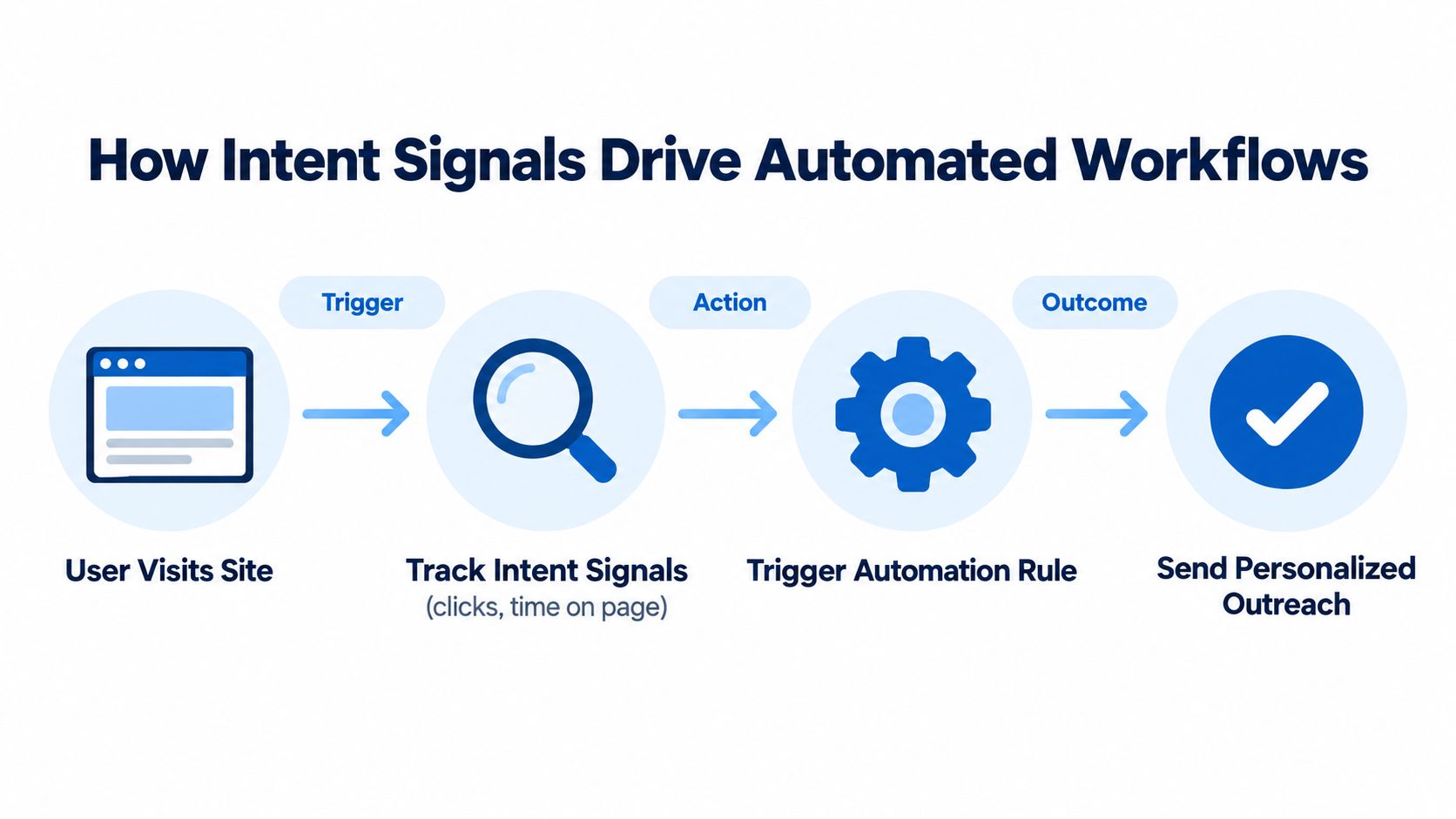
- How Intent Signals Drive Automated Workflows
- Measurable Benefits for B2B Revenue Teams
- Real-World Applications and Smart Outreach
- Navigating Platform Risks and Deliverability
- Implementing Automation and Tracking Success
- Building a Sustainable Outbound Motion
The Reality of Modern Sales Automation
A lot of teams still describe sales automation as if it only means an email sequence. That framing is too narrow for how B2B revenue work runs. In a modern stack, automation sits underneath the work, moving records, triggering tasks, logging activity, and keeping the process consistent while reps stay focused on the buyer.
From repetitive admin to operational infrastructure
Older automation was limited. A contact filled out a form, entered a drip campaign, and maybe triggered a reminder for a rep to follow up later. The modern version covers more of the workflow, because the biggest bottleneck is not only follow-up, it is the manual work around it, from lead handoff to CRM hygiene to pipeline updates.
Practical rule: if a workflow repeats, follows rules, and slows a rep down, automate it before it reaches someone’s calendar.
What sales automation includes today is broader than messaging. It covers lead routing, data capture, activity logging, personalized follow-up triggers, and pipeline updates so sellers can spend more time on qualification and deal movement. Analysts at McKinsey say roughly one-third of sales and sales-operations tasks can be automated with current technology (research summary). That point matters because it places automation where it belongs, on high-frequency, rules-based work rather than judgment-heavy moments like account strategy, negotiation, or multi-stakeholder consensus building.
The smartest teams treat automation as an operational layer, not a shiny tool category. The CRM, outreach system, data layer, and sequencing logic need to work together. If those pieces are fragmented, reps end up doing the same manual work automation was supposed to remove.
Modern sales automation also reaches into LinkedIn workflows, where account safety and buyer context matter more than raw message volume. A rep can trigger the right next step from profile changes, engagement patterns, or account activity instead of blasting the same sequence to everyone in a list. That shift changes the definition of automation from generic follow-up to targeted execution that respects how buyers signal interest.
How Intent Signals Drive Automated Workflows
Modern automation works best when it reacts to signals, not static lists. A CSV full of names gets stale fast. A live audience that updates from buying behavior stays closer to reality, which is why signal-driven workflows are replacing batch-and-blast execution in stronger outbound motions.
Signal stacking is the difference maker
A single action rarely tells you much. A prospect liking a post, commenting on a competitor’s announcement, changing roles, or engaging with a category discussion might not mean much alone. Combined, those events create a more useful pattern, especially when the workflow is built to recognize combinations instead of isolated clicks.
That’s the logic behind signal stacking, the practice of combining multiple micro-interactions into one person-level or account-level trigger. It’s especially useful on LinkedIn, where public activity often reveals buying context earlier than a form fill or anonymous web visit. LeadBeast’s guide on intent signals versus static lists fits neatly here, because the core distinction is between waiting on a fixed list and letting current behavior decide who should be contacted.
Plain-language ICPs become living audiences
A good ICP should not live only in a strategy deck. In practice, it becomes a set of filters that can qualify companies and people dynamically, then update as signals change. That’s where living audiences matter, because the list refreshes as roles shift, engagement patterns change, and new interactions appear.
This is also why person-level intent is more useful than anonymous traffic in many outbound motions. Anonymous web data can show interest at the site level, but LinkedIn activity often shows who is behind the intent. When you can combine role changes, competitor engagement, and public interactions, automation can wait for the right moment instead of sending a message too early.
Outreach should fire because a buyer did something meaningful, not because a sequence timer expired.
A strong workflow usually follows a simple logic chain, even if the underlying system is complex:
- Define the ICP in plain language. Keep the qualification rules readable so sales and operations teams can agree on them.
- Stack multiple signals. Use combinations of public behaviors to reduce noise.
- Trigger an action. Send outreach only when context is strong enough to justify it.
- Refresh the audience automatically. Drop stale leads and add new matches without manual list work.
The result is better timing, better relevance, and less waste. That’s the practical shift in what sales automation means now. It’s no longer just about scheduled emails, it’s about context-aware action around real buyer behavior.
Measurable Benefits for B2B Revenue Teams
Automation earns its place when it gives reps back time and tightens pipeline quality. The gains show up fastest in teams that are stuck in repetitive work, especially where response speed and process consistency shape revenue outcomes.
Capacity shifts from administration to selling
Sales automation works best when it removes the work that does not need human judgment. Lead routing, follow-up triggers, data capture, and activity logging can all run in the background, so reps spend less time updating systems and more time on qualification, discovery, stakeholder mapping, and opportunity progression.
That shift matters because it reduces the gaps between signal and action. When a buyer shows intent, the rep does not need to wait for admin tasks to clear before responding. The workflow can move the account forward while the team stays focused on conversation quality.
Adoption shows the category is already part of the stack
Adoption patterns make that clear. A 2023 HubSpot survey cited in an industry roundup found that 75% of B2B companies use sales automation tools to streamline lead management, and 85% of enterprise-level B2B companies used sales automation for pipeline management compared with 40% in 2019 (B2B adoption roundup).
The same source says 45% of B2B companies used CRM software with built-in automation features, up from 38% in 2021 (same roundup). That suggests automation has moved into the core operating layer for lead management and pipeline control.
For revenue teams, the practical question is no longer whether automation belongs in the stack. It is which steps need human judgment and which steps should run automatically. That line usually sits around nuance, timing, and account context, not around logging, routing, or basic follow-up.
The teams that get value from automation protect buyer attention and automate the boring parts that get in the way of relevance.
Warm, signal-led outreach benefits from that approach. A buyer who has already interacted with a relevant topic is easier to approach than someone pulled from a stale list. Automation does not create that warmth on its own, but it can preserve it by matching the right message to the right moment and keeping the process consistent as the account moves.
Real-World Applications and Smart Outreach
The best automation doesn’t feel like automation to the buyer. It feels like a rep paid attention. That’s especially true on LinkedIn, where a small public action can be enough to start a relevant conversation if the workflow is built around the right trigger.
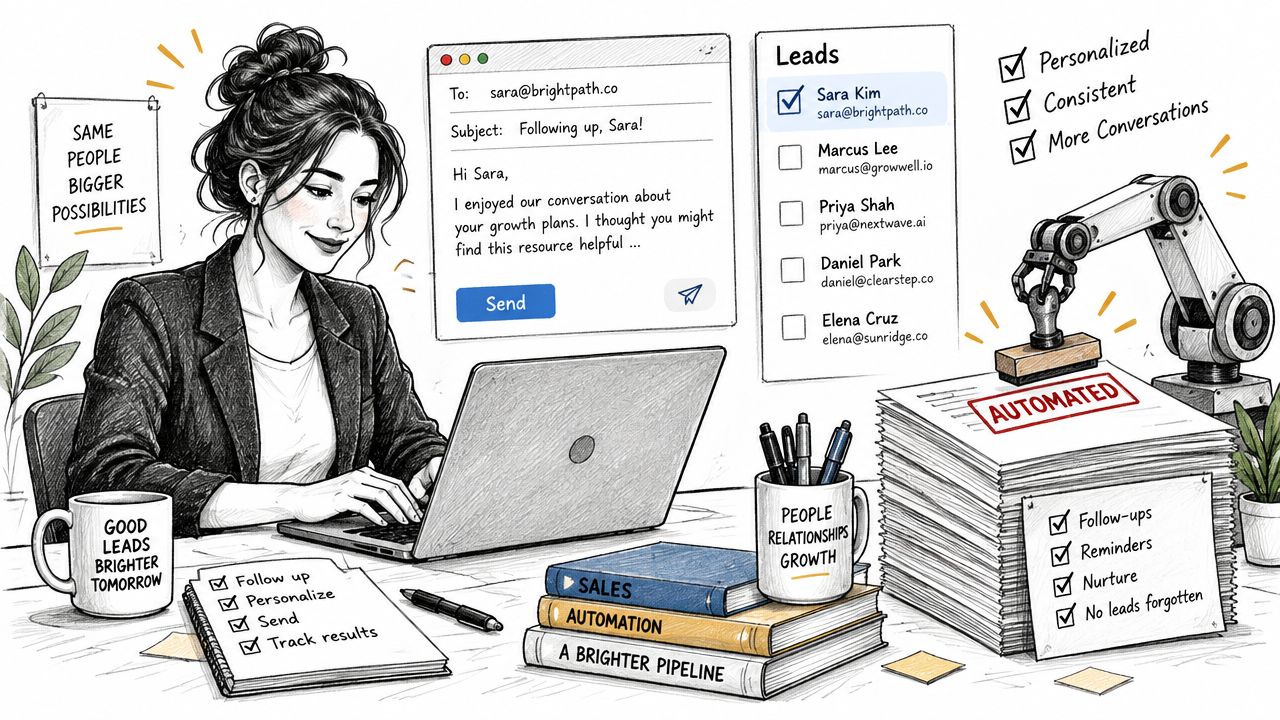
A common example looks like this. A prospect comments on a competitor’s post, visits a product comparison thread, or changes roles into a target function. That signal hits the system, the account matches the ICP, and the workflow drafts a message that references the actual trigger rather than a generic pitch. If the sequence is designed well, the message acknowledges context, then points the buyer toward a useful next step instead of asking for too much too soon.
The best teams make that outreach moment-matched. The trigger determines the angle, the ICP determines whether the person belongs in the audience, and the rep or system decides how much personalization is needed. That’s how automation supports relevance instead of flattening it.
Video works well here because it shows how the sequence of a signal, a response, and a follow-up can feel cohesive when the process is tightly governed.
Centralized reply handling matters as much as sending
Outreach is only half the job. Once a buyer replies, the conversation needs to land in a place where the team can see it, route it, and respond quickly. That’s why a centralized inbox is a practical requirement, not a nice-to-have. If replies are scattered across individual inboxes or disconnected tools, automation creates more chaos than it removes.
A good operating model keeps the response loop tight. The signal creates the first message, the inbox captures the reply, and CRM sync keeps the record current. That’s how automation supports live selling without losing context.
Some teams also layer in tools that support prospecting and workflow management, including CRM-connected systems, LinkedIn-specific prospecting tools, and platforms that turn public engagement into outbound opportunities. LeadBeast is one example of a system that detects LinkedIn buying signals, qualifies people and companies against an ICP, and routes replies into a centralized workflow.
The point isn’t the tool alone. The point is the operating behavior around it. When the workflow starts with a real trigger and ends with a managed conversation, automation becomes a channel for targeted outreach rather than a factory for noise.
Navigating Platform Risks and Deliverability
A sales team can do everything else right and still get burned by risky automation. The problem shows up fast. Accounts get restricted, messages look suspicious, and deliverability drops when workflows ignore pacing, relevance, and platform rules.
Why volume-first automation backfires
Spray-and-pray outreach causes the most trouble. Too many touches, sent too quickly, with little context, make the buyer feel spammed and signal risky behavior to the platform. That applies to email and LinkedIn.
Safer delivery follows the cadence of real selling. It uses human-like pacing, randomized delays where appropriate, and warm engagement that matches how prospects behave. The goal is not to outsmart the platform, it is to keep outreach credible.
Relevance lowers risk. If the message matches the signal, fewer touches are needed.
Build for compliance and clean handoff
Deliverability also depends on integration discipline. Tools need to sync cleanly with your CRM and outreach stack so seller activity and buyer activity stay in one source of truth. When systems duplicate records, miss updates, or send conflicting signals, the workflow breaks down quickly.
On LinkedIn, the safer approach is to automate only around clear triggers and a real ICP match. That naturally keeps volume lower, which helps protect account health while still creating pipeline. Intent-led workflows also make personalization sharper, because the trigger gives the message a reason to exist.
For a broader look at tool selection and workflow safety, the internal guide on LinkedIn lead generation tools is a useful companion. The main point is simple. Automation should support a controlled system, not turn outreach into a race for more messages.
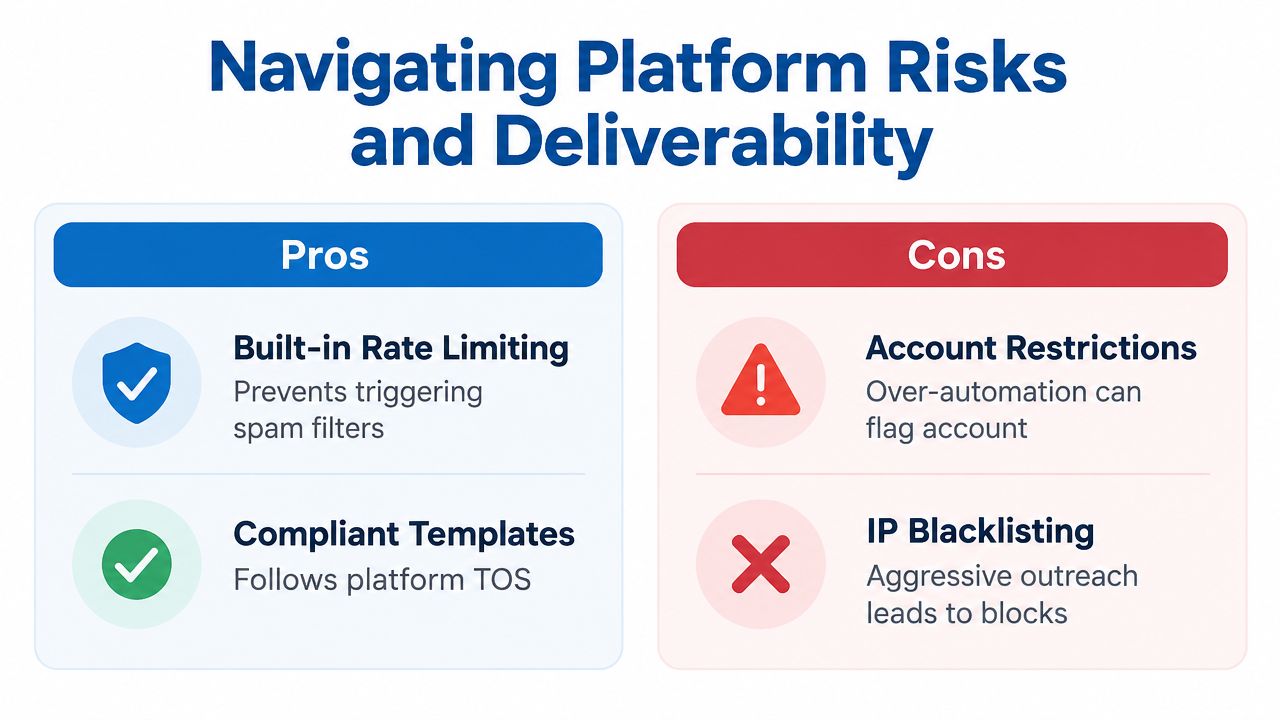
Stronger safety rails make scale more durable. That matters most in LinkedIn-based motions, where reputation, pacing, and contextual relevance all shape whether automation helps pipeline or harms it.
Implementing Automation and Tracking Success
A team can automate the wrong thing and still feel busy. Activity volume may rise while replies stay thin, meetings miss fit, and pipeline quality slips. The useful metric chain starts with clean data and ends with revenue outcomes.
Build the metric chain before you automate
A benchmark-style guide recommends tracking the path from data readiness to execution speed, buyer engagement, qualification, opportunity progression, closed revenue, margin, and retention. That framing works because automation can raise touch volume without improving results if no one watches what happens after the trigger.
Before rollout, benchmark the basics. Check CRM completeness, routing quality, and how quickly leads are handled inside SLA. After rollout, compare those same inputs with downstream results like qualification quality and meeting conversion. The point is to prove that faster workflows create better conversations, not just more automated motion.
Track what actually changes
Keep the scorecard simple enough for the team to trust it.
| Stage | Metric to Track | Why It Matters |
|---|---|---|
| Data readiness | CRM data completeness | Automation only works well when records are usable and current |
| Execution speed | Time to first response | Speed matters when interest is still fresh |
| Buyer engagement | Reply quality | Stronger replies usually signal better relevance |
| Qualification | Qualified meeting rate | Shows whether the workflow is attracting the right buyers |
| Opportunity progression | Stage movement consistency | Reveals whether automation supports real pipeline flow |
| Closed revenue | Closed-won contribution | Connects automation to actual business results |
| Retention | Post-sale continuity | Shows whether the workflow supports long-term customer health |
The table stays simple on purpose. Complexity can hide weak spots. If lead volume rises but qualification quality drops, the system needs tuning. If response times improve while CRM data stays messy, the team is just automating confusion faster.
A practical way to judge prospecting tools is to see whether they improve signal quality, routing, and execution. The internal LinkedIn lead generation tools guide is useful here because tool choice affects how cleanly intent turns into outreach.
Roll out in small loops
Start with one workflow that has a clear trigger and one owner. Then check whether it creates more useful conversations, cleaner records, and more reliable handoffs. If it doesn’t, the problem is usually logic, data quality, or timing, not the idea of automation itself.
The teams that get this right do not celebrate the biggest send count. They watch the cleanest path from signal to conversation to pipeline.
Building a Sustainable Outbound Motion
Sales automation is now the backbone of modern B2B outbound, but only if it’s built around intent and account safety. The old model rewarded sheer volume. The newer model rewards timing, context, and the discipline to contact only the buyers who’ve signaled interest.
That’s why the strongest platforms look more like operating systems than sequencers. They need living audiences, CRM bidirectional syncing, and strict safety controls that keep outreach tied to real buyer behavior. They also need a clear ICP, which is why the definition in this ICP guide matters so much when you’re choosing where automation should and shouldn’t act.
If you’re evaluating tools, look for three things. First, can it detect intent from real public signals. Second, can it keep records and replies in sync with your CRM. Third, does it let you control pacing well enough to protect your accounts while scaling outreach responsibly.
That’s the practical answer to what sales automation is. It’s not a drip campaign. It’s the system that turns repeatable work, buying signals, and clean handoffs into a predictable outbound motion.
If you’re building LinkedIn-led outbound and want automation that respects ICP fit, signal quality, and account safety, take a look at LeadBeast. It turns public LinkedIn activity into context-aware outreach, keeps replies organized, and syncs prospect data into the tools your team already uses.