The most popular advice about lead qualification software is to buy a platform with better scoring. That advice skips the core problem: many companies don’t need more leads or another score. They need a defensible way to decide who deserves a rep’s time, why, and what should happen next.
A founder building outbound pipeline and a RevOps leader fixing demo-form handoffs aren’t shopping for the same solution. Yet both will find tools marketed as lead qualification software, even when those products solve entirely different operational problems.
Start by separating the jobs:
- Intent-based outbound qualification identifies relevant people showing signs of a problem you solve.
- CRM-native scoring prioritizes records already inside your sales and marketing systems.
- Data-enriched prospecting supplies the contact and company attributes needed to judge fit.
- Inbound routing and scheduling decides which incoming prospects should meet which rep.
CapyScout’s AI qualification guide offers additional context for evaluating AI-assisted qualification. The practical distinction remains simple: collecting evidence, ranking prospects, and assigning meetings aren’t interchangeable.
The tools below are grouped by the problems they address, not treated as equivalent competitors. Expect clear limitations alongside capabilities. A platform can be excellent at finding relevant contacts and still tell you little about whether those people have a buying project.
Table of Contents
- 1. LeadBeast
- 2. HubSpot Sales Hub and Marketing Hub
- 3. Salesforce Sales Cloud with Einstein Lead Scoring
- 4. Apollo
- 5. 6sense
- 6. HG Insights
- 7. Chili Piper
- 8. Default
- 9. RevenueHero
- 10. LeanData
- Lead Qualification Software at a Glance
- How to Choose the Tool That Matches Your Bottleneck
1. LeadBeast
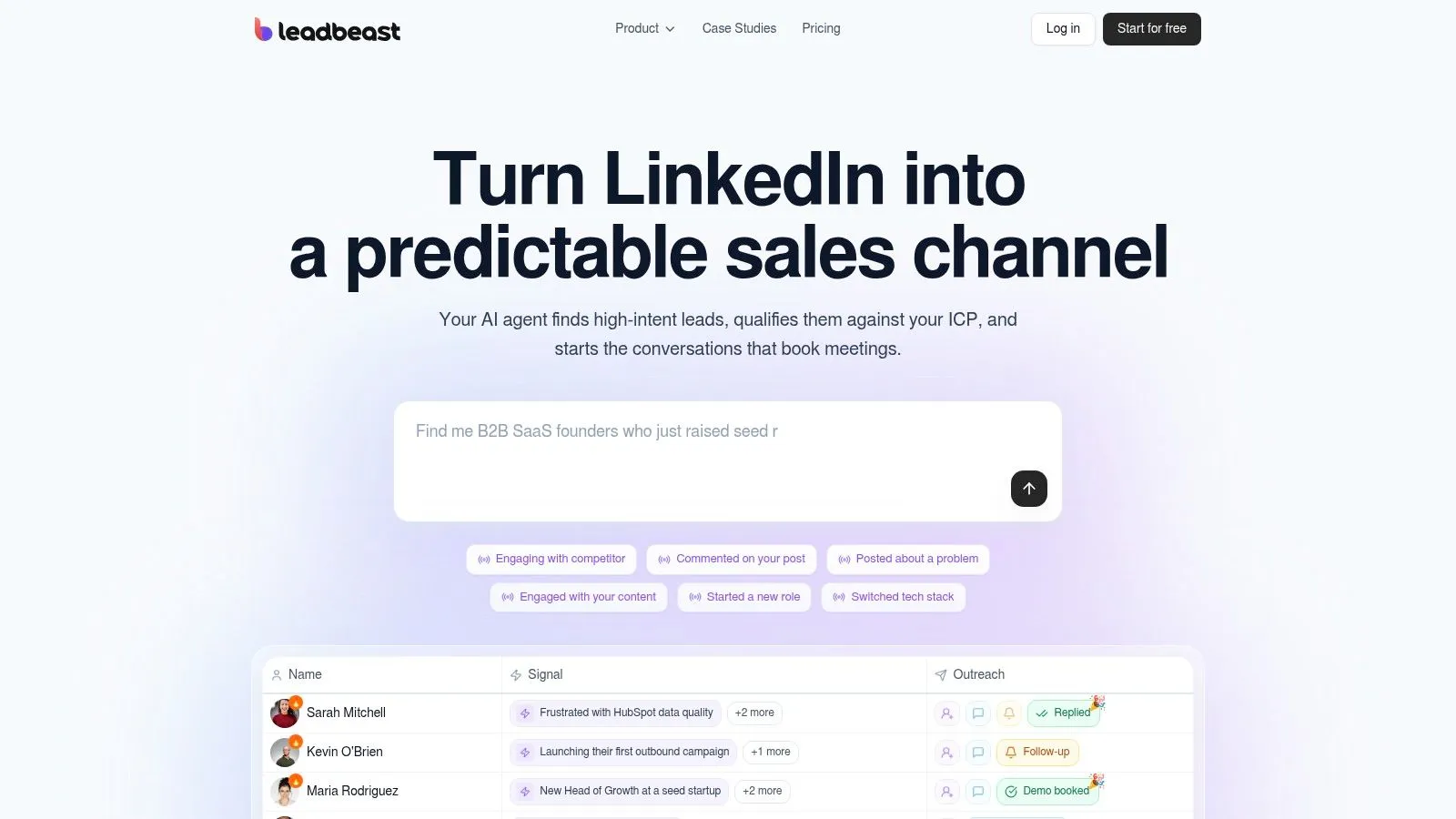
Best for outbound teams that need a reason to contact someone, not another static list. Our platform monitors LinkedIn activity, including posts, comments, role changes, and competitor engagement, then enriches and scores people against your ideal customer profile.
You describe your ideal buyer in plain language. Our AI qualifies people and companies, maintains living audiences, and engages high-intent profiles with messages matched to the activity that triggered qualification. Replies stay in a centralized inbox, while CRM and outreach integrations preserve campaign context.
Where signal stacking helps
Say you sell outbound consulting. A relevant sales leader commenting on a prospecting post is worth monitoring; that person also discussing poor outbound results and engaging with competitor conversations gives you a stronger basis for outreach.
Intent still isn’t buyer-confirmed need. The IntentAmplify buyer-intent evidence framework distinguishes engagement from sales acceptance and recognized opportunity. Treat stacked signals as a reason to start a relevant conversation, not proof that someone has budget.
- Strength: Plain-language matching, enrichment, scoring, and dynamic audiences reduce manual prospect research and CSV maintenance.
- Workflow advantage: Trigger-aware messaging, follow-ups, and centralized replies connect qualification to action.
- Limitation: This is a LinkedIn-centered approach, not a replacement for broad contact discovery or inbound scheduling. Safety-focused pacing cannot guarantee account safety or campaign results.
Our Professional plan costs $237 per month and includes three LinkedIn senders. Every plan includes unlimited warm leads, AI outreach with lead scoring, a shared reply inbox, and API and MCP access.
The strongest fit is founders, sales teams, and agencies whose buyers already discuss relevant problems on LinkedIn. Results still depend on the ICP, offer, and messaging.
2. HubSpot Sales Hub and Marketing Hub
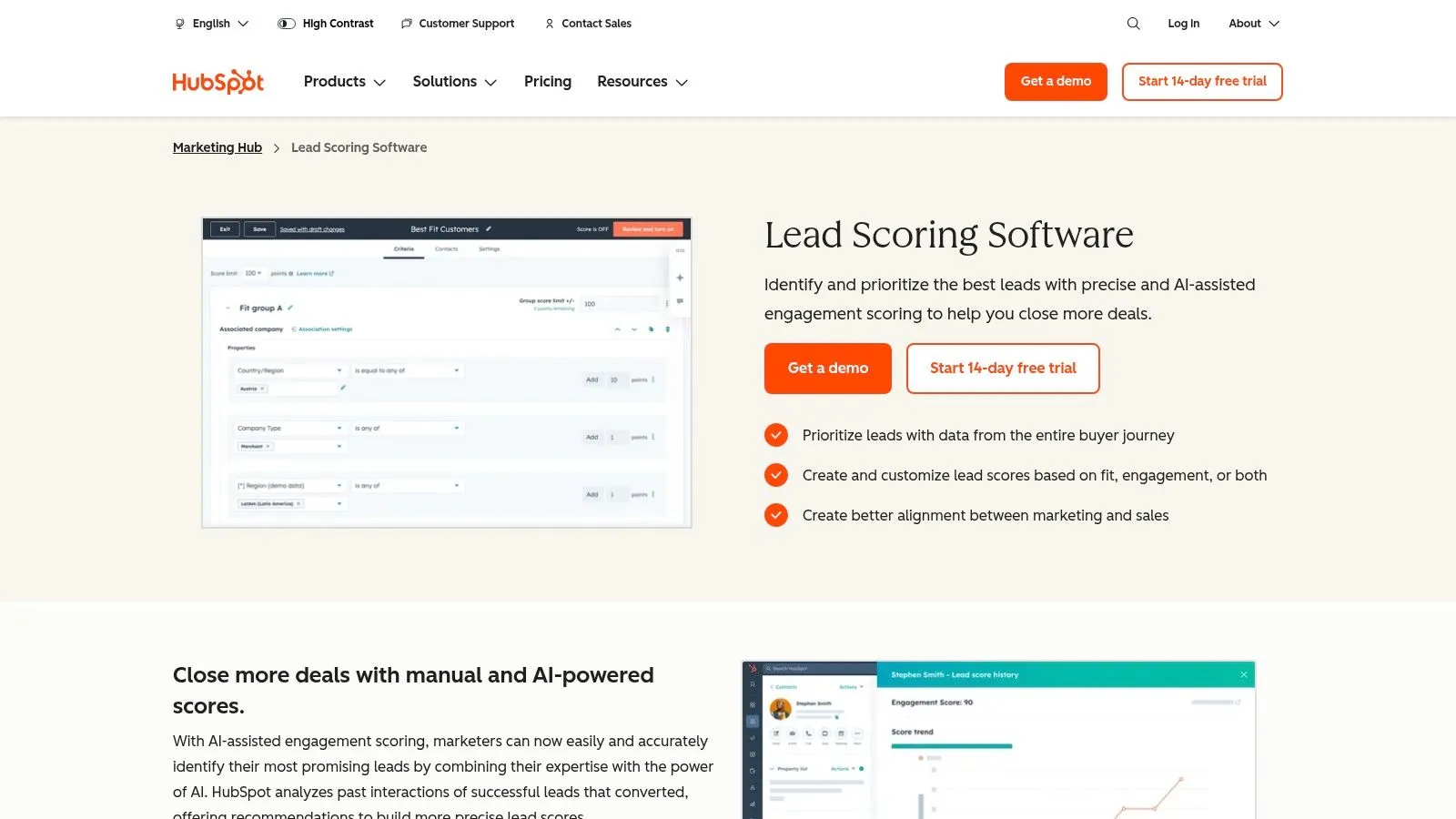
Choose HubSpot when marketing and sales disagree because they’re working from different records. HubSpot’s lead scoring tools connect fit and engagement scoring with CRM records, segmentation, and follow-up workflows.
The operational benefit is shared context. Marketing can define what makes an account relevant, sales can inspect the activity behind a handoff, and operations can connect qualification thresholds to the next action.
Keep fit separate from activity
A target-account decision-maker who hasn’t engaged and an enthusiastic student downloading every resource shouldn’t end up looking equally qualified. Separate fit scores from engagement scores, then define how those dimensions combine before sales receives a record.
AI-assisted scoring can help identify patterns among converted leads, but it doesn’t remove the need to review lifecycle definitions and conversion history. If reps mark conversions inconsistently, the resulting recommendations deserve scrutiny.
- Works well: Shared records and flexible criteria help teams establish a common qualification model.
- Requires maintenance: Negative scoring, stale activity, duplicate records, and changing ICP definitions need an owner.
- Commercial trade-off: Free CRM tools provide an entry point, but advanced scoring depends on the Hub and subscription tier.
I’d shortlist HubSpot when it’s already your operating system or you want to consolidate sales and marketing workflows. Buying the broader platform solely to obtain a score field is harder to justify.
3. Salesforce Sales Cloud with Einstein Lead Scoring
A Salesforce team with established lead processes has a different problem from a startup building its first prospect list. Einstein Lead Scoring prioritizes existing leads using historical conversion patterns, rather than supplying an outbound audience from scratch.
Within Salesforce Sales Cloud, scores and contributing factors can support reporting and automation. That makes the product relevant when reps already manage qualification, ownership, and pipeline inside Salesforce.
A predictive score estimates resemblance to past converters. It doesn’t confirm that the buyer has an active project.
Before deployment, distinguish the ranking mechanism from the qualification decision. This explanation of what lead scoring means is useful for defining where a score should inform a handoff rather than automatically authorize one.
Audit the conversion label
Ask what a historical conversion represents in your organization. If teams have converted leads for administrative reasons, model output may prioritize records that resemble workflow habits rather than commercial potential.
The advantage is native alignment with Salesforce reports, Flow automation, and segmented sales processes. The cost is administration: configuration, clean historical records, and ongoing evaluation require someone who understands both Salesforce and the sales motion.
Einstein is an add-on, not a lightweight standalone scoring purchase. I’d favor it for an established Salesforce organization, but wouldn’t switch CRMs just to obtain predictive prioritization.
4. Apollo
Apollo fits the prospecting-data bottleneck. If reps struggle to find relevant people, enrich their records, and start outreach without moving between disconnected tools, Apollo brings those activities into a common workflow.
Its qualification capabilities include AI-generated scores, configurable custom scores, and separate evaluation of people and companies. Score breakdowns help operators inspect which criteria contributed rather than treating every recommendation as self-explanatory.
Useful data isn’t buying intent
Say you sell security software to growing SaaS companies. Company attributes and a relevant technical title can establish fit, but neither confirms that the contact is evaluating a purchase.
Use Apollo to build and prioritize the addressable audience. Then add evidence that justifies outreach timing, and let the conversation establish need.
- Best operational fit: Teams that want discovery, enrichment, scoring, and sequences close together.
- Main limitation: Qualification remains dependent on profile accuracy and the criteria you select.
- Buying consideration: Plans differ in feature access and credit allocations, so test the actual workflow rather than just the search interface.
A free plan can help evaluate core prospecting capabilities. For a broader category comparison, these sales intelligence tools illustrate the distinction between finding contact data and identifying sales readiness.
Apollo makes more sense when missing prospect data is the constraint. It won’t fix an unclear ICP by returning a larger list.
5. 6sense
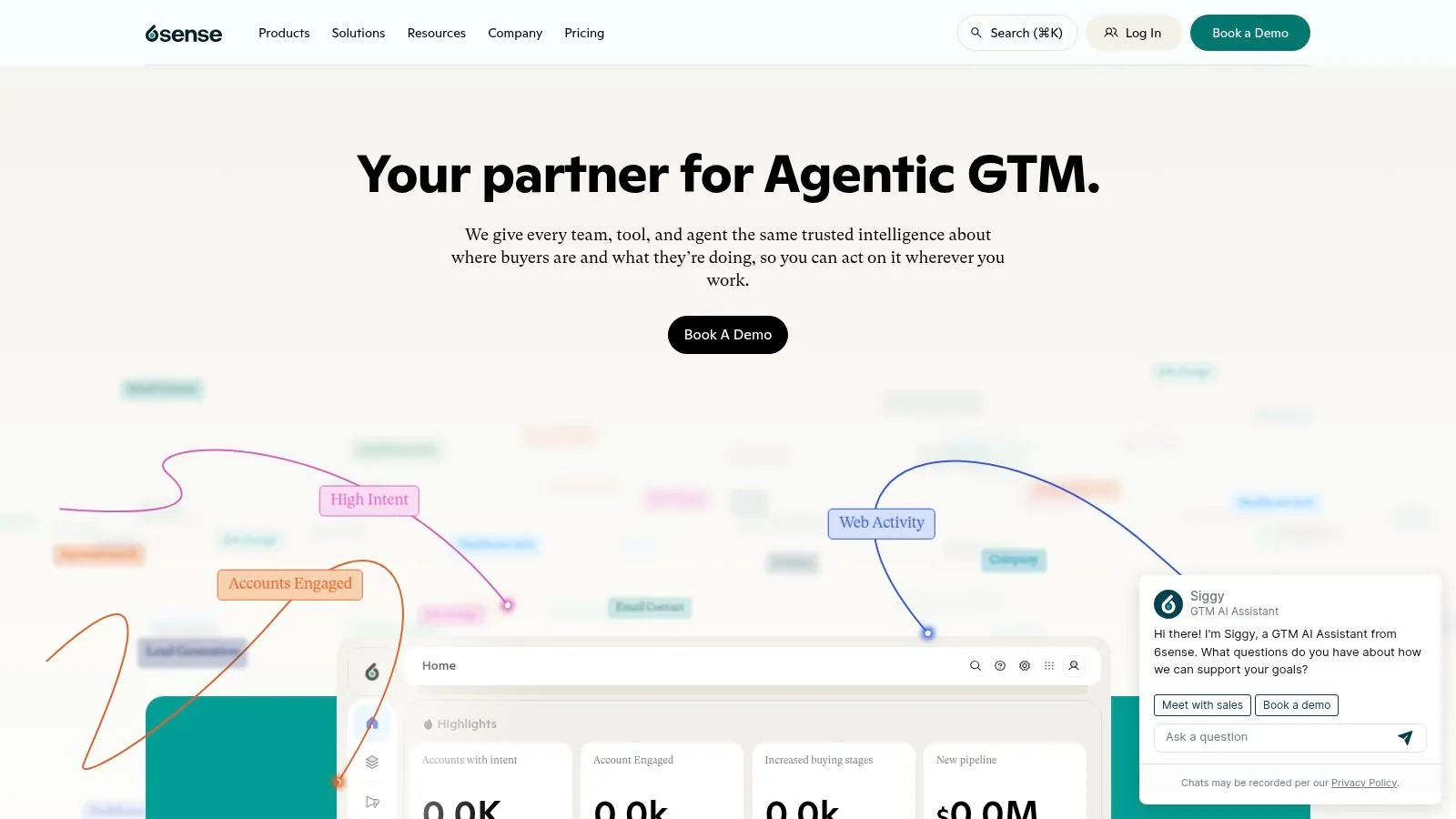
Enterprise buying rarely maps neatly to an isolated lead record. 6sense addresses that problem through account-level fit, intent, engagement, and buying-stage signals, alongside account and lead prioritization.
This is most relevant when sales and marketing coordinate activity across target accounts. A team can use account context to decide where to focus advertising, research, and rep attention, then deliver scores into CRM and marketing automation workflows.
Account-level caution: Evidence that a company is researching your category doesn’t identify which employee owns the purchase.
That distinction matters during outreach. A promising account deserves investigation, but an individual contact still needs person-level relevance and a credible reason for the message.
Buy for an account-based motion
The practical value of intent-based marketing comes from changing actions when meaningful signals appear. Before buying, define which account-state changes would trigger research, outreach, nurture, or a pause.
Strengths include broader account context and prioritization that considers timing rather than firmographics alone. Trade-offs include quote-based pricing, predictive models offered as an add-on, and implementation requirements that deserve careful validation.
I’d shortlist 6sense for a mature B2B organization with an established account-based process. For a founder who needs a manageable prospect list and relevant conversations, the platform may introduce more operational scope than the business can use.
6. HG Insights
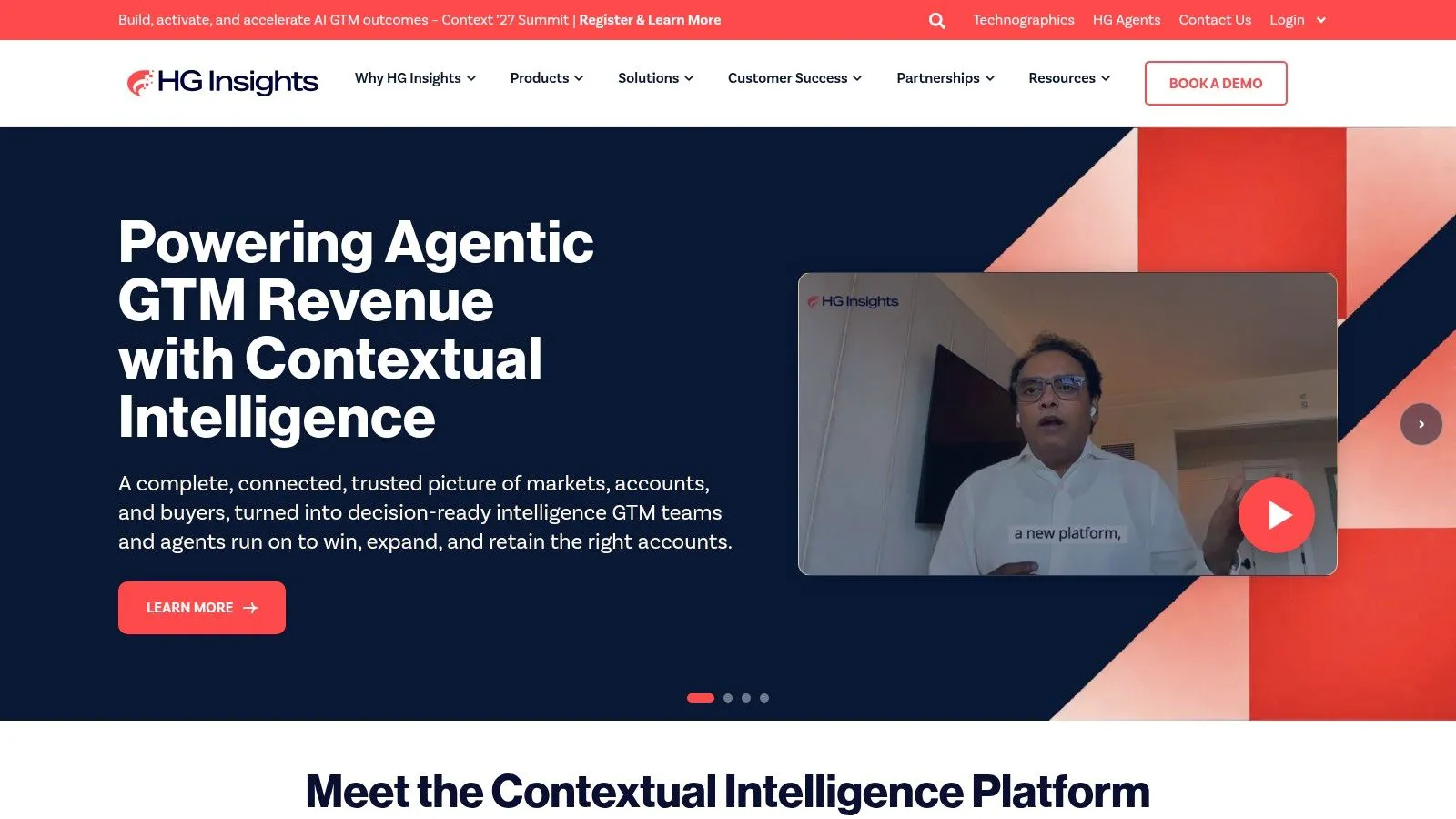
Product activity can change who deserves sales attention. A signup from a relevant company tells you something different from a signup that develops meaningful usage and shows behavior associated with conversion.
HG Insights combines first-party CRM, marketing, and product-usage data with firmographic, technographic, and intent inputs. Its scoring capabilities include inbound qualification models and lead engagement scoring, making it relevant to SaaS teams with richer behavioral evidence.
Define useful product behavior first
Don’t send every active user to sales. Specify which actions indicate individual exploration, team adoption, or a plausible commercial requirement, then combine those behaviors with company fit.
HG Insights supports predictive and rule-based approaches, fit-and-engagement grades, and model review through Data Studio. Those controls are useful only if operations can explain the underlying events and identity matching.
- Advantage: Product behavior can contribute to qualification instead of leaving sales dependent on titles and form submissions.
- Implementation burden: CRM, marketing, and product identities need reliable matching and consistent definitions.
- Buying limitation: Public self-serve pricing isn’t listed, so evaluation is sales-led rather than a simple checkout decision.
This is a stronger candidate when you already have useful first-party evidence but struggle to combine it. If product instrumentation is incomplete, fix event definitions and account mapping before expecting a scoring model to distinguish serious adoption from casual use.
7. Chili Piper
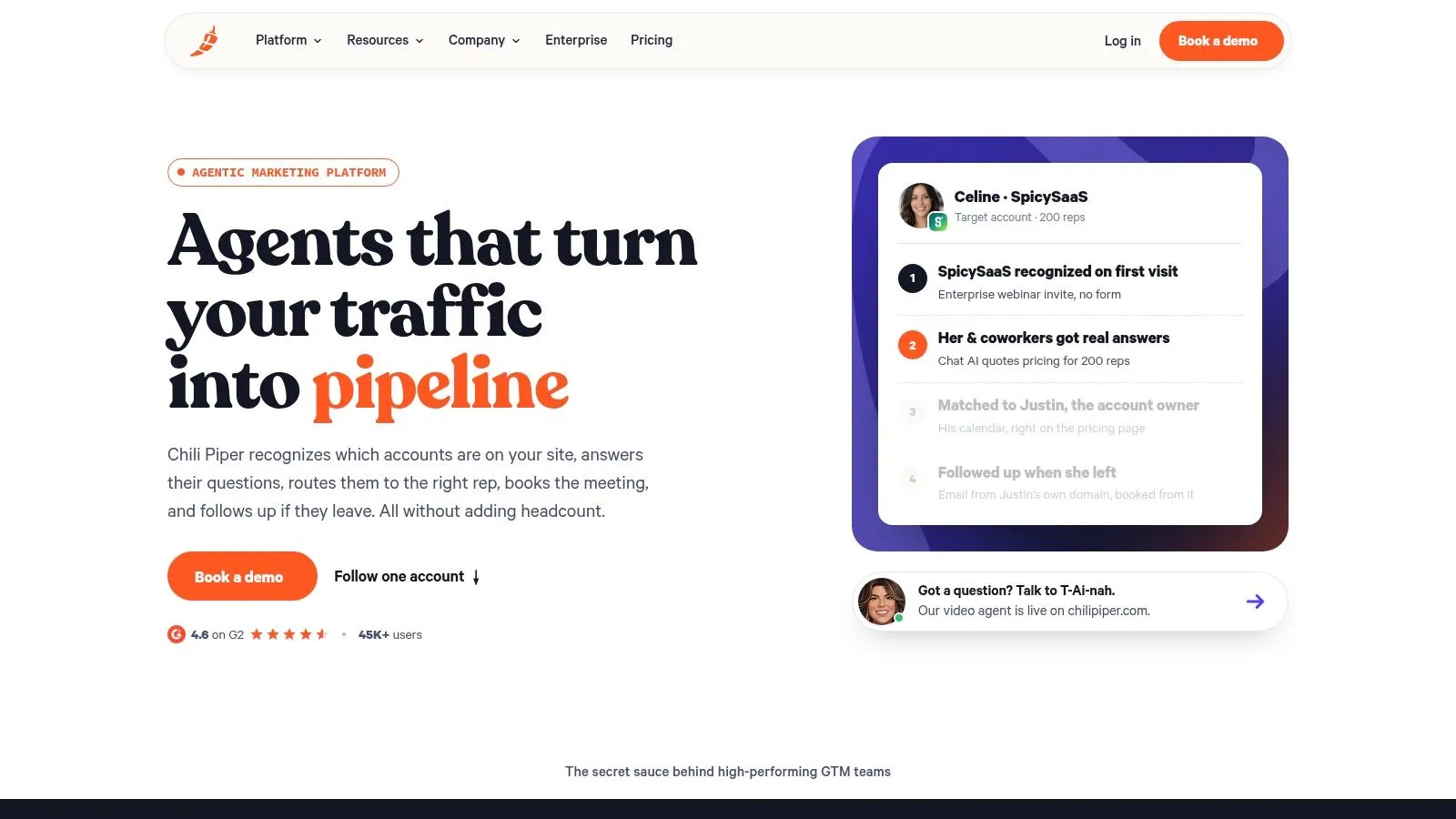
A qualified prospect submits a demo request, receives an acknowledgment, and then waits while someone decides who owns the account. Chili Piper targets that handoff, connecting inbound qualification with routing and meeting booking.
Chili Piper uses team-defined rules and form information to determine where a prospect should go. Relevant plans also provide chat-based engagement and scheduling capabilities.
The timing problem is substantial: the Agency Growth speed-to-lead guide describes a 2007 study associated with James Oldroyd and MIT that found the odds of qualifying a lead were 21 times higher when first contact occurred within five minutes rather than after 30 minutes.
Test the exceptions, not just the happy path
The clean demo is a new prospect with an obvious territory and an available rep. Your evaluation should also include existing customers, open opportunities, account-owner conflicts, unsupported regions, and unavailable calendars.
What works: Qualification leads directly to an actionable next step, rather than another queue for someone to process.
What doesn’t: A scheduling workflow can’t establish unspoken budget, urgency, or internal agreement. A booked meeting remains a meeting, not an accepted opportunity.
Chili Piper is a focused choice when qualified inbound demand already exists and response friction is the problem. It’s less relevant when the team’s main challenge is discovering outbound prospects or scoring a database.
8. Default
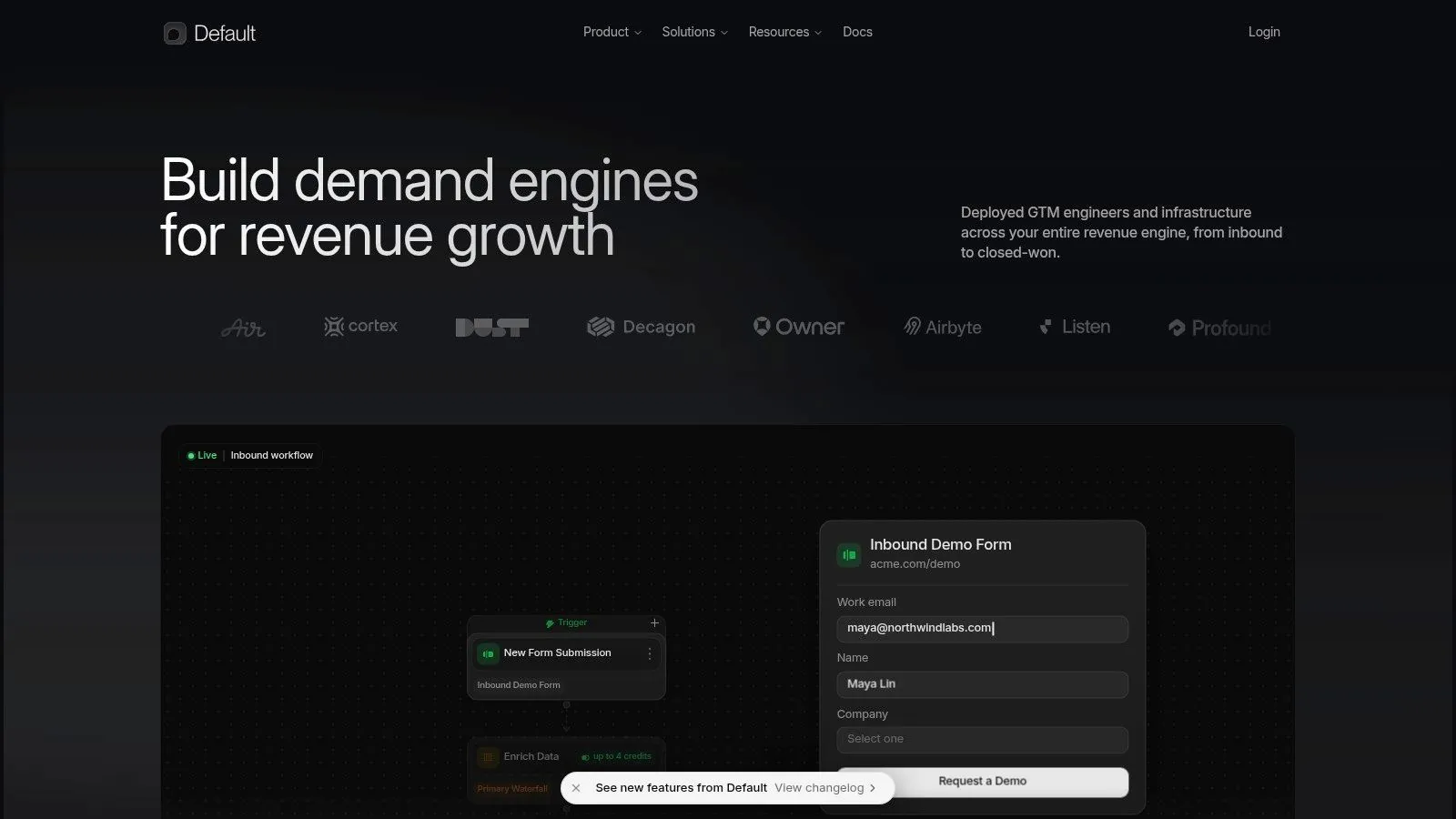
Default is worth evaluating when inbound qualification breaks between systems. Enrichment happens in one place, routing in another, scheduling somewhere else, and the CRM receives an incomplete account of what happened.
Default combines enrichment, qualification, routing, scheduling, and CRM synchronization. For RevOps teams, the attraction is managing the decision and handoff together rather than maintaining separate connectors for every step.
Make the decision traceable
Its workflow audit logs deserve attention during evaluation. An operator should be able to inspect why a prospect qualified, which enriched attributes were used, where the record went, and whether synchronization succeeded.
The Leadscale CRM hygiene guidance emphasizes the underlying governance problem: advanced prioritization still depends on reliable identities, current attributes, and controlled lifecycle fields. Automation should preserve that evidence rather than hide it behind a score.
- Strong fit: RevOps teams consolidating multiple inbound operations steps.
- Important test: Submit records with missing enrichment, conflicting ownership, and existing CRM matches.
- Commercial trade-off: The listed Growth plan requires an annual commitment, while seats and enrichment usage can add to the platform cost.
Default won’t remove the need for a clear qualification policy. It can help execute that policy across the workflow, provided the team defines what happens when enrichment is unavailable or contradictory.
9. RevenueHero
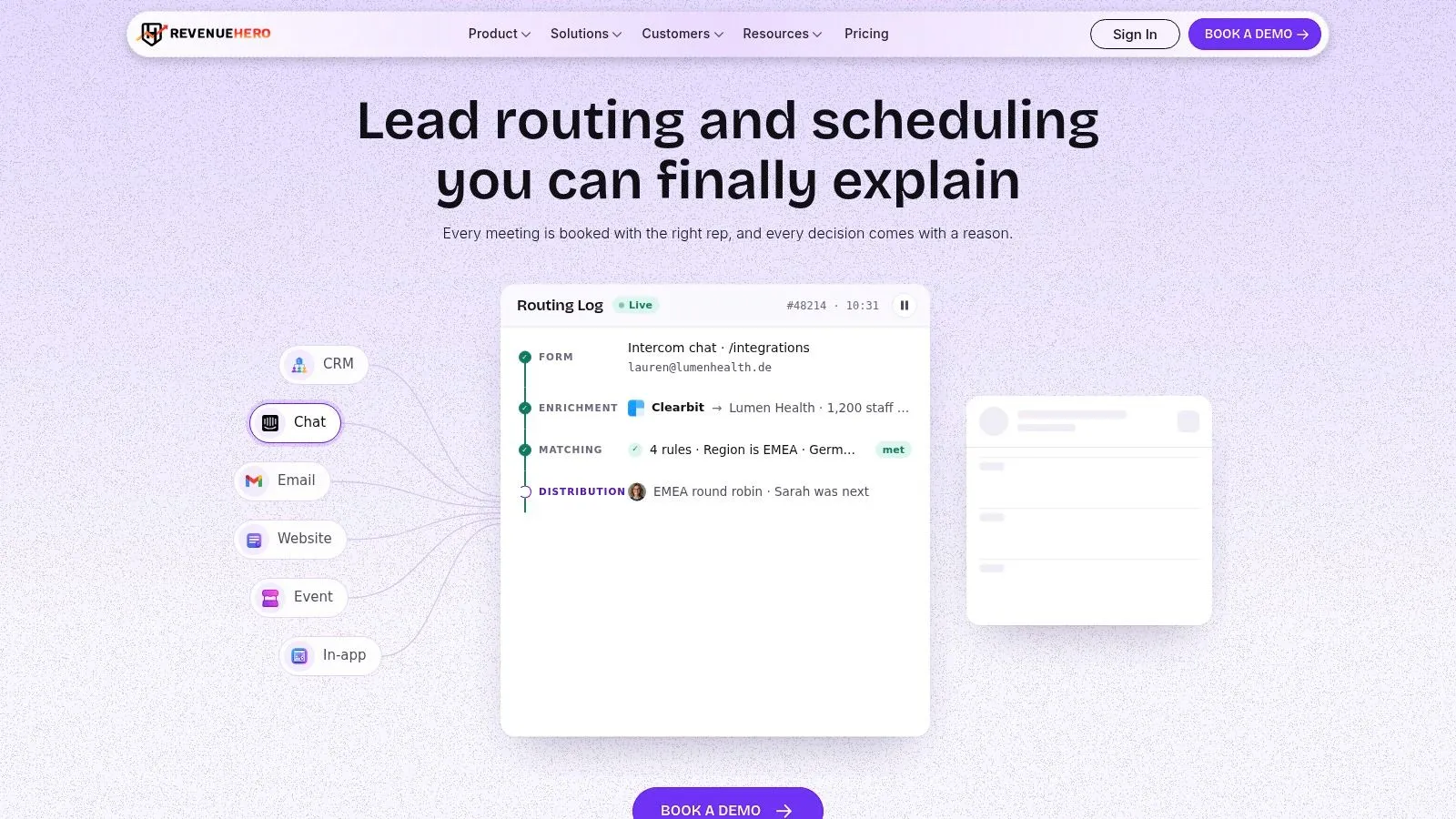
Shorter forms create a practical qualification question: which details must the buyer supply, and which can enrichment provide? RevenueHero lets inbound teams qualify using form responses and enriched values, then route qualified prospects into meeting booking.
That makes it a focused option for teams improving the path from submission to scheduled conversation. Rules can use company attributes without requiring prospects to type every firmographic detail.
Don’t let an unknown enrichment value silently become a disqualification. Give incomplete records an explicit fallback path.
A missing company attribute might mean poor fit, or it might mean the provider couldn’t resolve the record. Those cases require different handling.
Check ownership before round robin
For a straightforward inbound team, round-robin distribution can be appropriate. Once named accounts, existing opportunities, and customer relationships matter, ownership precedence needs more attention than calendar appearance.
- Useful capability: Form responses and enriched fields can drive qualification and scheduling in the same flow.
- Scope limitation: This isn’t a full outbound discovery or predictive scoring system.
- Cost consideration: Pricing includes platform and per-user components, so compare the full deployment rather than the entry fee alone.
I’d shortlist RevenueHero when the requirement is clearly bounded: qualify incoming requests, honor ownership rules, and book suitable prospects. Evaluate meeting attendance and sales acceptance alongside booking volume so easier scheduling doesn’t disguise weaker qualification.
10. LeanData
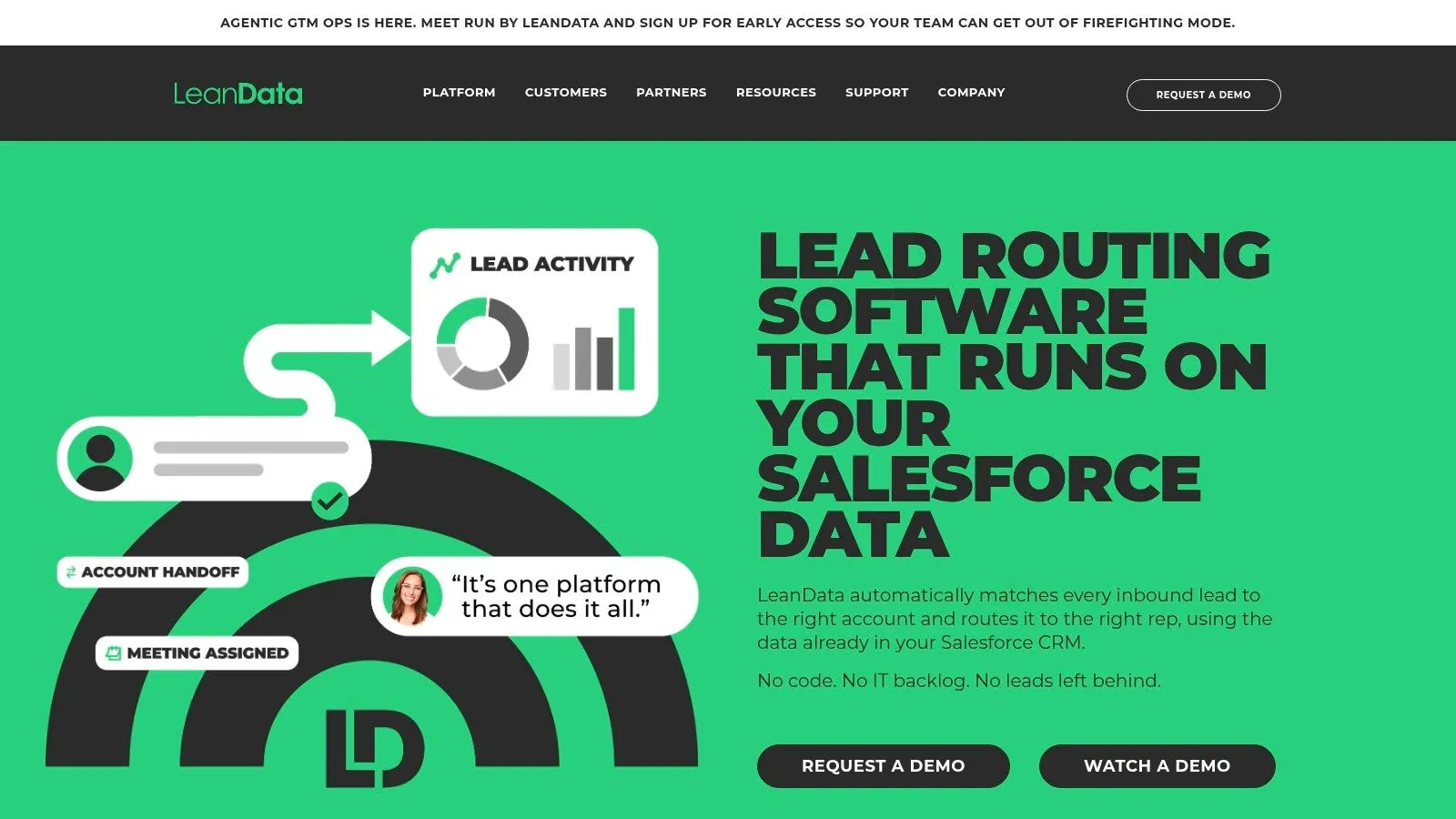
The right score won’t help if the record reaches the wrong owner. LeanData addresses lead-to-account matching, routing, and go-to-market orchestration inside Salesforce.
Consider it when qualification already exists upstream, but account matching and assignment remain unreliable. A relevant contact might need to reach an account owner, a territory team, or an opportunity owner rather than the next available rep.
Operational qualification needs ownership
LeanData supports matching, deduplication, rule-based routing, workflow automation, and service-level tracking. Visual workflow tools and audit visibility help operations teams inspect how a record moved through the process.
That’s a different purchase from contact discovery. You’re buying a way to operationalize qualification and enforce follow-up, not primarily a new source of prospects.
The strongest case is a Salesforce organization with complicated ownership and assignment requirements. The main limitation is the same specialization: teams using another CRM won’t benefit from a Salesforce-native approach.
During evaluation, test subsidiary accounts, alternate email domains, duplicates, absent owners, and leads associated with existing opportunities. Also define who maintains territory changes and handles routing failures.
Pricing is quote-based, and onboarding may be billed separately. The buying decision should rest on the complexity and consequences of your assignment problems, not on whether another platform also advertises routing.
Lead Qualification Software at a Glance
Feature checklists can make qualification tools look interchangeable. The practical difference is where each one finds or evaluates buying intent: LinkedIn activity, CRM records, prospecting data, or inbound forms. Use this table to compare those approaches and identify which fits your workflow.
| Primary qualification approach | Best for | Starting price | Free plan or trial |
|---|---|---|---|
| LeadBeast, LinkedIn intent signals, AI ICP matching, lead scoring, and enrichment | B2B teams prospecting through LinkedIn buying signals and prioritizing relevant conversations | Professional: $237/month, billed monthly | Start for free |
| HubSpot Sales Hub and Marketing Hub, CRM-based fit and engagement scoring, including AI-assisted recommendations | Teams qualifying leads in a shared CRM | Advanced scoring depends on subscription tier | Free CRM tools |
| Salesforce Sales Cloud with Einstein Lead Scoring, predictive scoring based on historical conversion patterns | Salesforce teams with sufficient historical lead data | Einstein scoring is an add-on | No free option listed |
| Apollo, AI and custom scoring for people and companies, combined with prospecting and outreach | Teams qualifying and engaging prospects in one workflow | Paid plans vary | Free plan |
| 6sense, predictive scoring based on account fit, intent, engagement, and buying stage | Mature B2B teams running account-based or enterprise sales | Custom pricing; predictive models are an add-on | No free option listed |
| HG Insights, scoring that combines firmographic, engagement, intent, and product-usage data | B2B SaaS teams with complex inbound or product-led qualification needs | Pricing not publicly listed | No free option listed |
| Chili Piper, rule-based inbound qualification, routing, and meeting scheduling | Teams focused on speed-to-lead and booking qualified inbound prospects | Pricing not listed | No free option listed |
| Default, enrichment and workflow-based qualification, routing, and scheduling | RevOps teams consolidating inbound operations workflows | Pricing not listed | No free option listed |
| RevenueHero, qualification using form responses and enriched data, followed by routing and scheduling | Teams improving inbound form-to-meeting conversion | Pricing not listed | No free option listed |
| LeanData, Salesforce-native lead-to-account matching, routing, and workflow orchestration | Salesforce teams with complex account matching and assignment needs | Quote-based | No free option listed |
LeadBeast fits outbound teams that rely on LinkedIn and prioritize relevance over message volume. Its Professional plan includes three LinkedIn senders, six campaigns, and ten team seats. The platform finds people matching a plain-language ICP, scores and enriches leads, then automates personalized outreach when buying signals appear.
The other rows address different bottlenecks. HubSpot and Salesforce score records within a CRM, while Apollo combines prospecting and engagement. 6sense and HG Insights focus on account-level intelligence; Chili Piper, Default, and RevenueHero handle inbound qualification and scheduling. LeanData centers on Salesforce matching and routing. For several vendors, pricing or trial availability is not listed here, so compare those details directly during evaluation.
How to Choose the Tool That Matches Your Bottleneck
Start with the point where a relevant prospect stops moving. If reps lack credible reasons to contact people, investigate outbound signal tools. If good records sit unprioritized in your CRM, evaluate native scoring before introducing another system.
When reps can’t identify suitable contacts or company attributes, investigate sales intelligence and enrichment. When qualified prospects submit forms but struggle to reach the right seller, focus on routing and scheduling.
The commercial outcome matters more than the activity count. The Cirrus Insight sales conversion benchmark review reports that, in anonymized CRM data across hundreds of B2B companies, only about 13% of leads became opportunities. Your evaluation should therefore connect qualification decisions to sales acceptance and opportunity creation, not merely replies or calendar bookings.
Establish the qualification contract
Write down what sales agrees to accept: target-company fit, person-level relevance, recent evidence, disqualifiers, and the required next step. Separate monitor, nurture, and contact now so a weak signal doesn’t automatically trigger outreach.
Review lead scoring and intent detection options against that contract. A useful demo should show what evidence the rep receives, what happens when information is missing, and how a human can reverse an automated decision.
LeadBeast is a fit when LinkedIn is part of your acquisition strategy and quality matters more than volume. Before scaling senders, validate connection acceptance, relevant replies, and sales acceptance against your actual ICP; the offer and messaging still determine whether the conversation goes anywhere.
Your 30-day validation checklist
Use this as a test plan, not a promise that every sales cycle will produce revenue within the evaluation window:
- Define the baseline: Record current qualification, acceptance, meeting, and opportunity outcomes before changing the workflow.
- Test a real ICP: Use representative prospects, including borderline fits and clear disqualifiers, rather than a vendor’s demonstration audience.
- Inspect the evidence: Review why records qualified, whether signals were recent, and whether explanations match the underlying activity.
- Verify CRM sync depth: Test ownership, lifecycle stages, replies, suppression, duplicates, and updates in both directions.
- Review outreach quality: Separate positive commercial replies from polite responses, referrals, and objections before increasing sender capacity.
- Exercise failure paths: Check missing enrichment, unavailable calendars, existing customers, and records already being worked.
- Make the decision: Expand only when reps accept the output and operations can explain it. Otherwise, adjust the criteria or reject the tool before adding volume.
Our platform combines LinkedIn buying-signal monitoring, ICP qualification, enrichment, scoring, and context-aware outreach so reps can prioritize relevant conversations. Visit LeadBeast to test that workflow against your actual buyer profile before scaling your outreach.